
- What makes medical imaging data different?
- The role of PACS in medical imaging
- Why direct frontend access is risky
- Middleware as a control layer for imaging data
- From medical imaging to user-facing results
- Security implications
- Why this matters for digital healthcare
- Key takeaway
- Building a healthcare product with imaging integration?
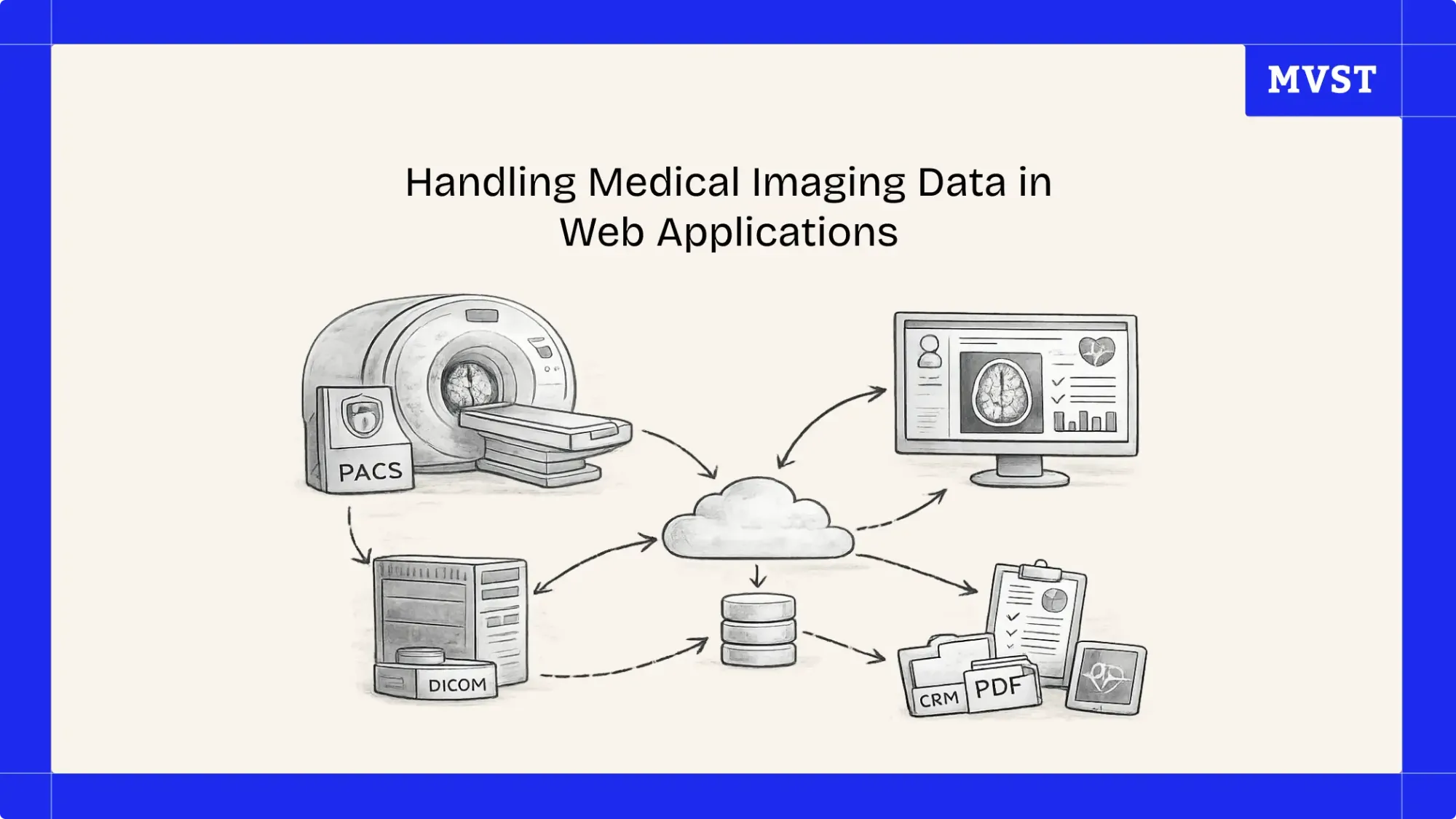
Handling Medical Imaging Data in Web Applications
- What makes medical imaging data different?
- The role of PACS in medical imaging
- Why direct frontend access is risky
- Middleware as a control layer for imaging data
- From medical imaging to user-facing results
- Security implications
- Why this matters for digital healthcare
- Key takeaway
- Building a healthcare product with imaging integration?
Modern healthcare applications increasingly integrate medical imaging data into digital products.
But handling imaging data, especially in web-based environments, is fundamentally different from working with standard user data.
Medical images are not simple files. They are clinical artifacts, often part of regulated systems, and tightly connected to diagnostic workflows.
When building preventive healthcare products like aeon, integrating imaging data required careful architectural and product decisions.
What makes medical imaging data different?
Unlike typical application data, medical imaging data:
- Is often stored in specialized systems (PACS)
- Follows structured medical standards
- Can contain highly sensitive health information
- Must preserve clinical integrity
- Is frequently linked to formal medical reports
This means imaging data cannot simply be uploaded to a frontend and displayed like a document or profile picture.
It must be handled within clearly defined system boundaries.
The role of PACS in medical imaging
PACS (Picture Archiving and Communication Systems) are specialized platforms used in medical environments to store, retrieve, and annotate imaging data such as MRI or CT scans.
These systems are designed for:
- Clinical workflows
- Secure storage
- Medical traceability
- Professional interpretation
They are not designed as public-facing application layers.
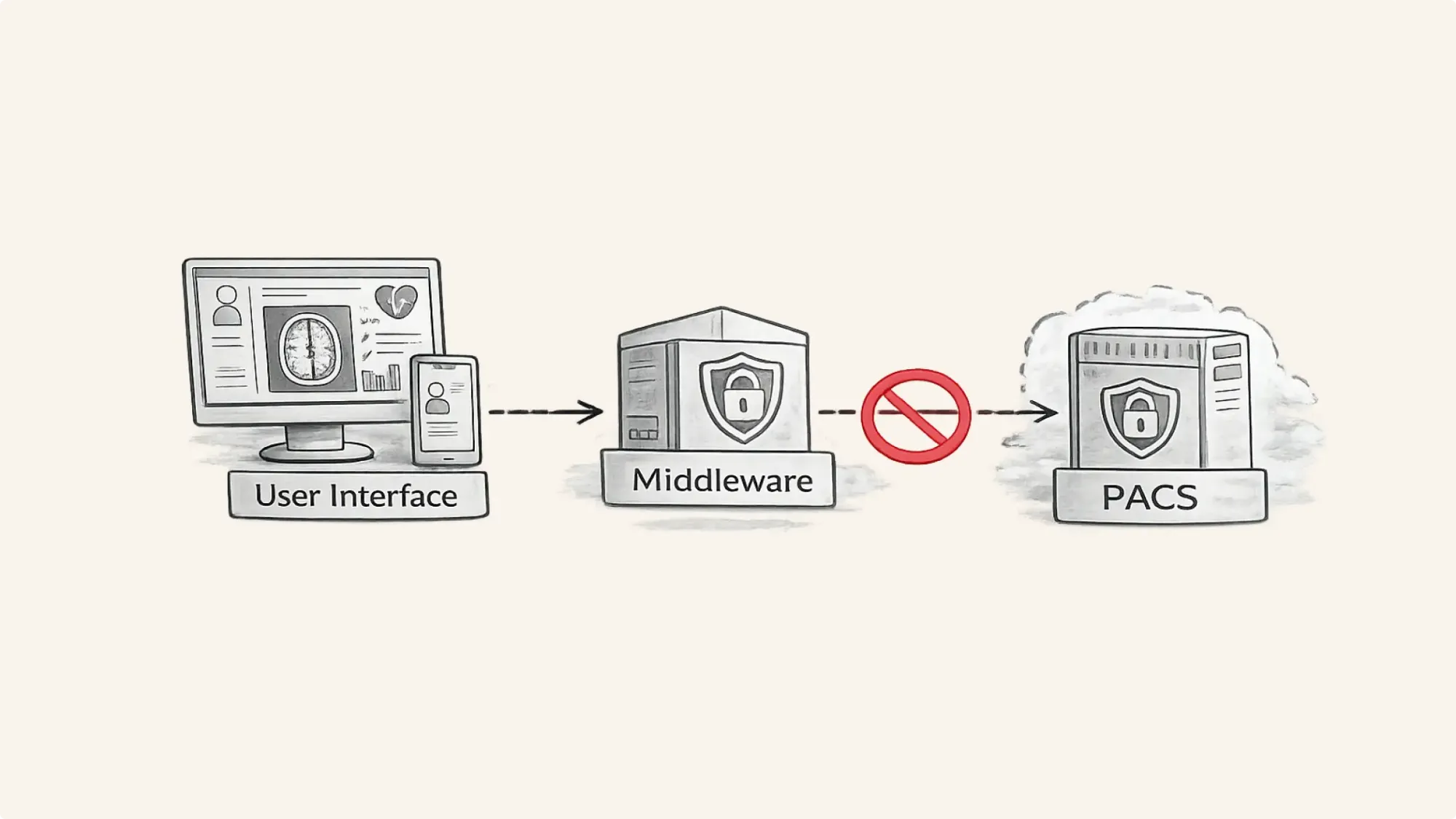
In digital healthcare products, PACS systems should never be directly exposed to user interfaces.
Why direct frontend access is risky
Allowing a frontend application to directly communicate with a PACS system would introduce multiple risks:
- Uncontrolled exposure of raw medical data
- Weak access enforcement
- Tight technical coupling
- Reduced system resilience
Instead, imaging data must pass through controlled layers that enforce validation, transformation, and access rules.
This architectural principle aligns closely with the system boundaries discussed in Why Modern Healthcare Apps Need Middleware.
Middleware as a control layer for imaging data
In architectures like aeon’s, middleware acts as a structured boundary between:
User Applications
↓
Middleware
↓
PACS and backend systems
Middleware ensures that:
- Only necessary data is retrieved
- Data is transformed into application-safe formats
- Access control is enforced
- Internal system structures remain protected
This pattern reinforces the controlled data movement described in How Data Flows Through Modern Applications.
From medical imaging to user-facing results
Medical imaging is not typically shown directly in preventive healthcare products.
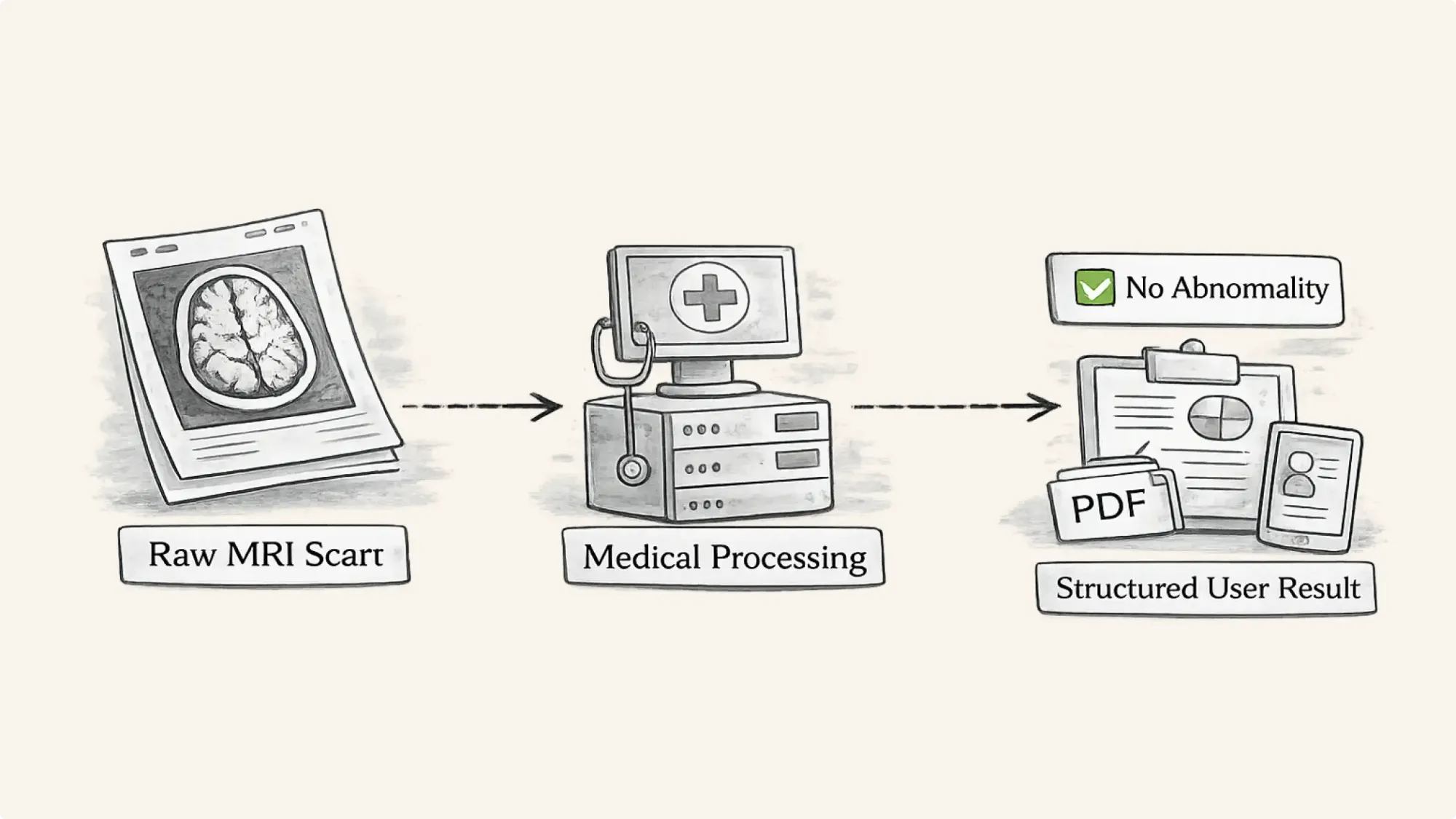
Instead, imaging findings are interpreted, structured, and translated into:
- Summarized results
- Categorized findings
- Structured PDF reports
- Clear user explanations
This translation layer connects directly to product design considerations discussed in Designing Digital Preventive Healthcare Products.
Handling imaging data responsibly therefore requires both:
- Strong system architecture
- Thoughtful user-facing translation
Security implications
Medical imaging data often falls under strict data protection requirements.
Handling it securely involves:
- Encryption in transit
- Encryption at rest
- Strict access control
- Controlled system boundaries
These principles align with the broader security foundations outlined in Security in Preventive Healthcare Applications.
Why this matters for digital healthcare
Medical imaging integration is where architecture, compliance, and product design intersect.
It forces teams to think about:
- System separation
- Controlled data exposure
- Role-based access
- Responsible translation of clinical information
Without careful design, imaging integration can quickly compromise both security and user trust.
You can see how these principles come together in the aeon showcase, where medical systems, middleware, and user-facing layers operate as a coordinated architecture.
Key takeaway
Handling medical imaging data in web applications requires more than technical integration.
It demands:
- Clear system boundaries
- Secure architectural layers
- Controlled data transformation
- Responsible presentation of medical findings
In preventive healthcare products, imaging integration is not just a feature; it is an architectural responsibility.
Building a healthcare product with imaging integration?
If you’re developing a digital healthcare application that needs to integrate medical imaging systems or PACS platforms, system boundaries and data control should be foundational decisions, not late-stage additions.
If you’d like to discuss how to structure imaging integration securely and scalably, feel free to reach out via our contact form.
Newsroom Ideas, Design & Technology in Motion
Practical insights on AI integration, headless e-commerce, UX/UI design, and digital product development. Case studies, implementation guides, and expert perspectives from the MVST team in Munich and Barcelona.

Breastkeeper Institute: A Full Brand Ecosystem, Built End-to-End
Ghida El BadriAug 07, 2026
Zurhorst Meditation Shop: A Conversion-First Relaunch
Ghida El BadriAug 05, 2026
Welcome to MVST, Tudor Verzes
Ghida El BadriJul 20, 2026