
Designing Digital Preventive Healthcare Products
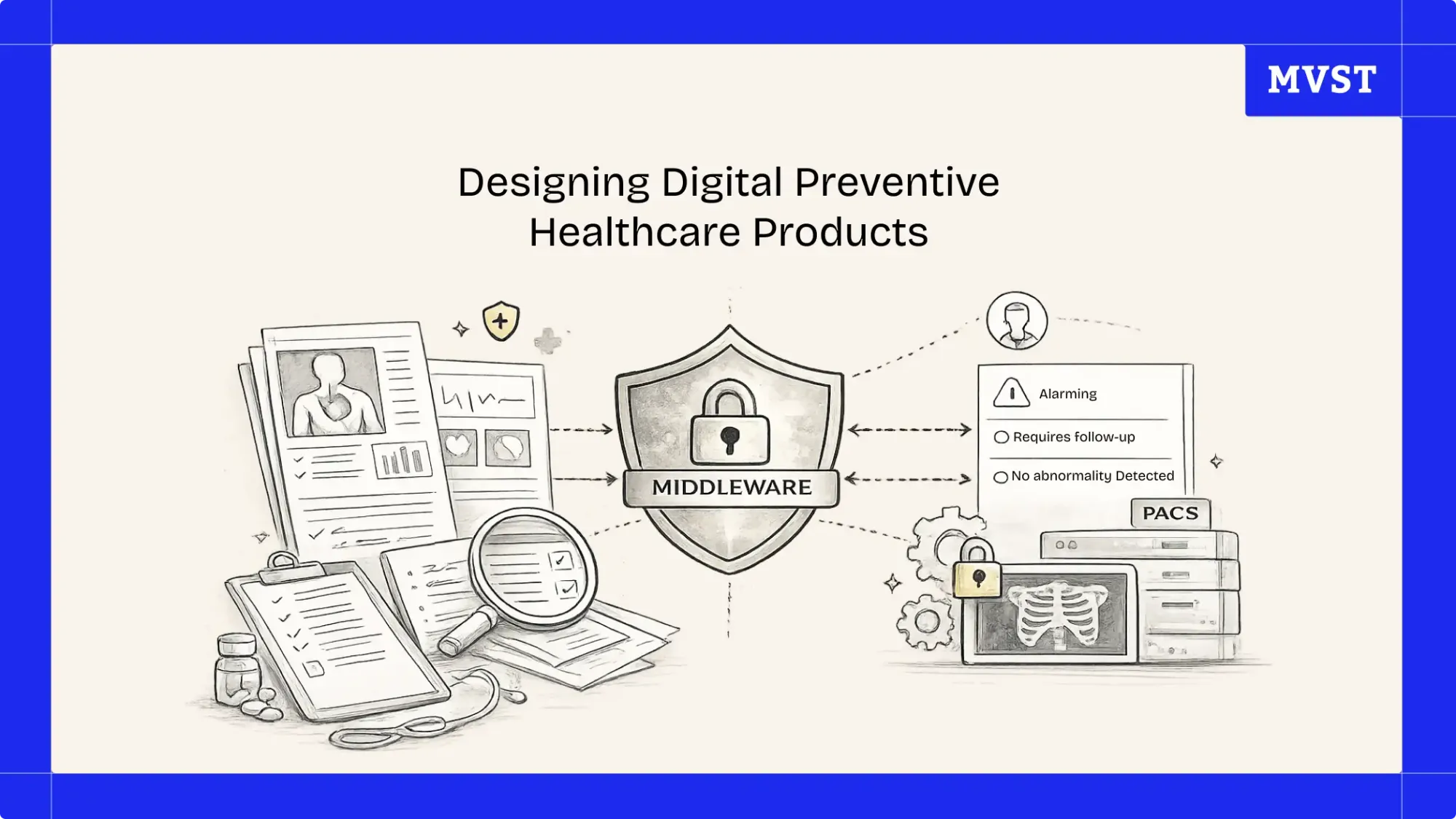
Designing digital healthcare products is not the same as designing lifestyle apps or productivity tools.
When medical findings, personal health data, and system constraints intersect, user interface decisions carry structural consequences. Product design becomes less about visual preference and more about responsible translation.
While working on preventive healthcare products like aeon, one challenge stood out clearly: how do you translate clinical precision into understandable digital experiences?
Translating medical findings into user interfaces
One of the most difficult elements to translate into a digital interface was the final doctor’s report.
In its original form, the result is a written medical document - detailed, technical, and structured for professional interpretation. Presenting this directly to end users would either overwhelm them or risk misinterpretation.
The challenge was not to simplify medicine, but to structure it.
This required combining:
- Generic explanations of findings
- Contextual educational information
- The user’s precise, individual results
Without losing clarity or accuracy.
Unlike entertainment apps, healthcare design must preserve meaning while improving accessibility.
What should be simplified - and what must remain precise?
Designing for preventive healthcare means walking a careful line.
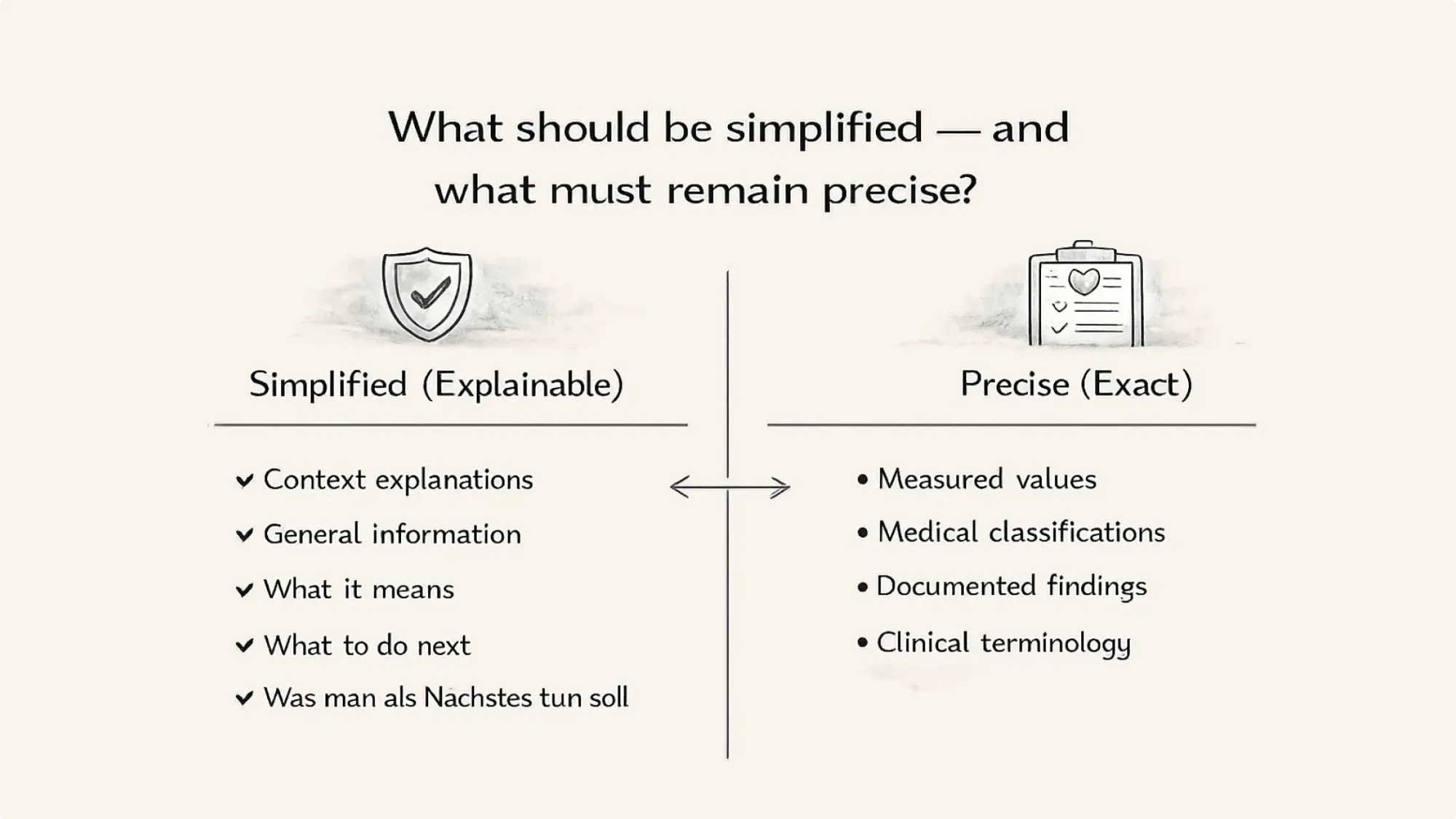
Some information can be explained in more general terms:
- What a specific finding typically means
- Why it may be relevant
- What users can do next
Other elements must remain exact:
- Measured values
- Medical classifications
- Documented observations
Oversimplification can damage trust.
Overcomplexity can create anxiety.
The product layer must mediate between both, a principle closely connected to the controlled data handling described in How Data Flows Through Modern Applications.
Designing trust through system boundaries
In healthcare, design is inseparable from architecture.
What users see is only a structured representation of underlying data.
The frontend does not decide what is valid, nor does it store sensitive information directly.
As discussed in Security in Preventive Healthcare Applications, clear system boundaries make it possible to design interfaces confidently, knowing that responsibility is enforced at deeper layers of the system.
Trust in healthcare UX is not achieved through visuals alone, it emerges from consistent system behavior.
Feedback loops in a regulated context
Even in highly structured environments like healthcare, iteration remains essential.
Before launch, test rounds with family and friends helped simulate the full user journey - from scan to final result.
These trial runs revealed:
- Points of confusion
- Opportunities for clearer explanation
- Small interaction frictions
Interestingly, the product did not require a final governmental validation step. But internal validation and responsible design decisions remained central throughout development.
Product design in preventive healthcare is system design
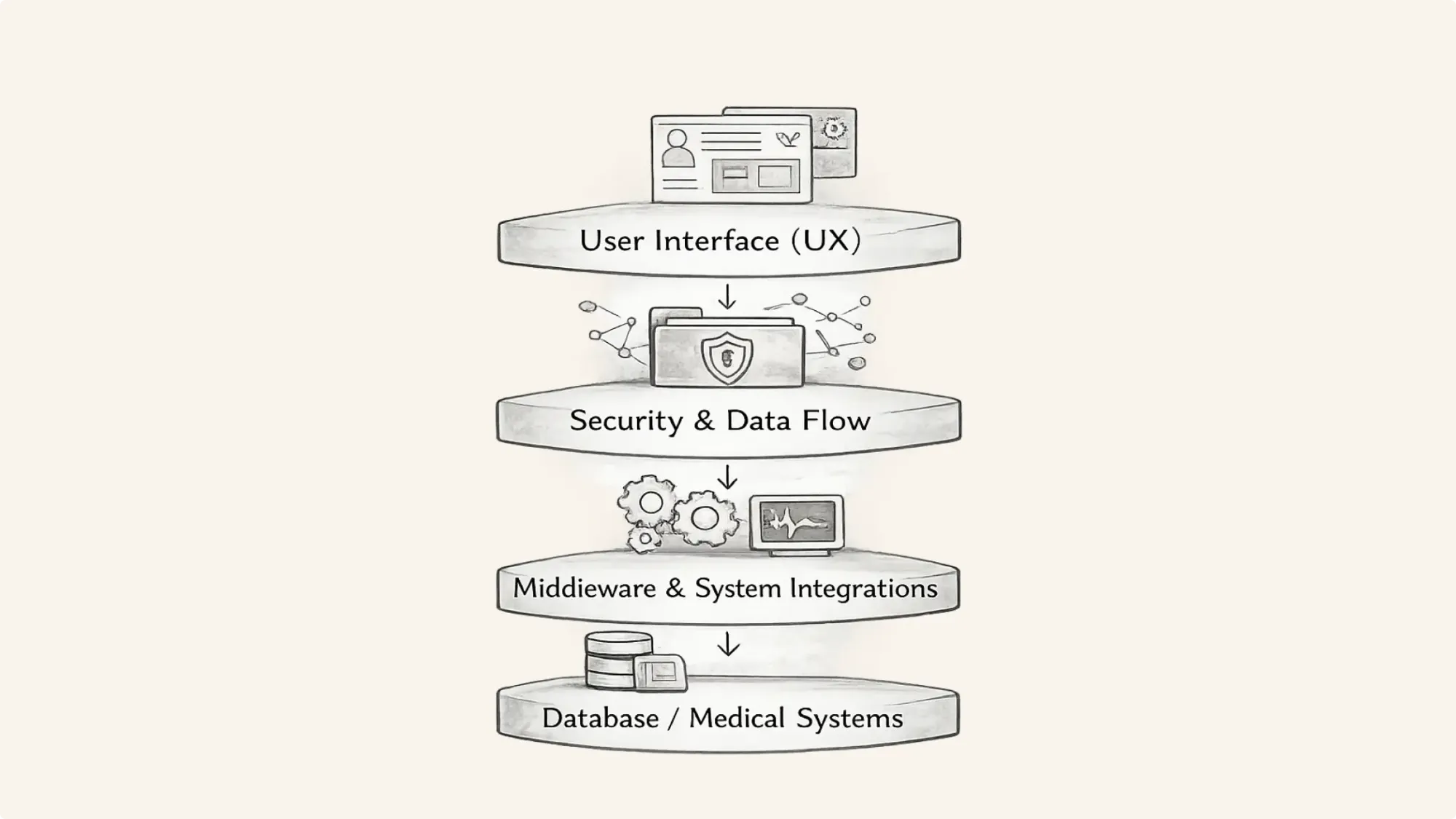
Designing a digital preventive healthcare product means designing within constraints:
- Sensitive personal data
- Medical accuracy
- Regulatory expectations
- Multi-system integrations
Design cannot exist independently from infrastructure.
It must align with:
- Security architecture
- Data flow control
- Middleware boundaries
- External integrations
You can see how these layers come together in the aeon showcase, where infrastructure and product design operate as a unified system rather than separate disciplines.
Key takeaway
Designing digital preventive healthcare products is not about simplification.
It is about translation.
It requires:
- Preserving medical precision
- Structuring information responsibly
- Designing clarity without distortion
- Aligning UX decisions with architectural boundaries
When product design and system architecture reinforce each other, healthcare applications become understandable, trustworthy, and sustainable over time.
Building a healthcare product?
If you’re developing a digital healthcare product where medical accuracy, user experience, and system architecture must work together, product design should be treated as a structural discipline, not just a visual one.
If you’d like to discuss how to design a preventive healthcare application responsibly and at scale, feel free to reach out via our contact form.
Newsroom Ideas, Design & Technology in Motion
Practical insights on AI integration, headless e-commerce, UX/UI design, and digital product development. Case studies, implementation guides, and expert perspectives from the MVST team in Munich and Barcelona.

Breastkeeper Institute: A Full Brand Ecosystem, Built End-to-End
Ghida El BadriAug 07, 2026
Zurhorst Meditation Shop: A Conversion-First Relaunch
Ghida El BadriAug 05, 2026
Welcome to MVST, Tudor Verzes
Ghida El BadriJul 20, 2026