
What Is Headless E-Commerce, and Is It Right for Your Business?
Everyone's talking about headless. Here's what it actually means.
"Headless" has become one of those words the tech industry loves to throw around without explaining. If you've heard it in a vendor pitch or agency proposal and nodded along, this post is for you. Here's what it actually means, what it costs, and most importantly, whether it's the right choice for your business.
What is headless e-commerce?
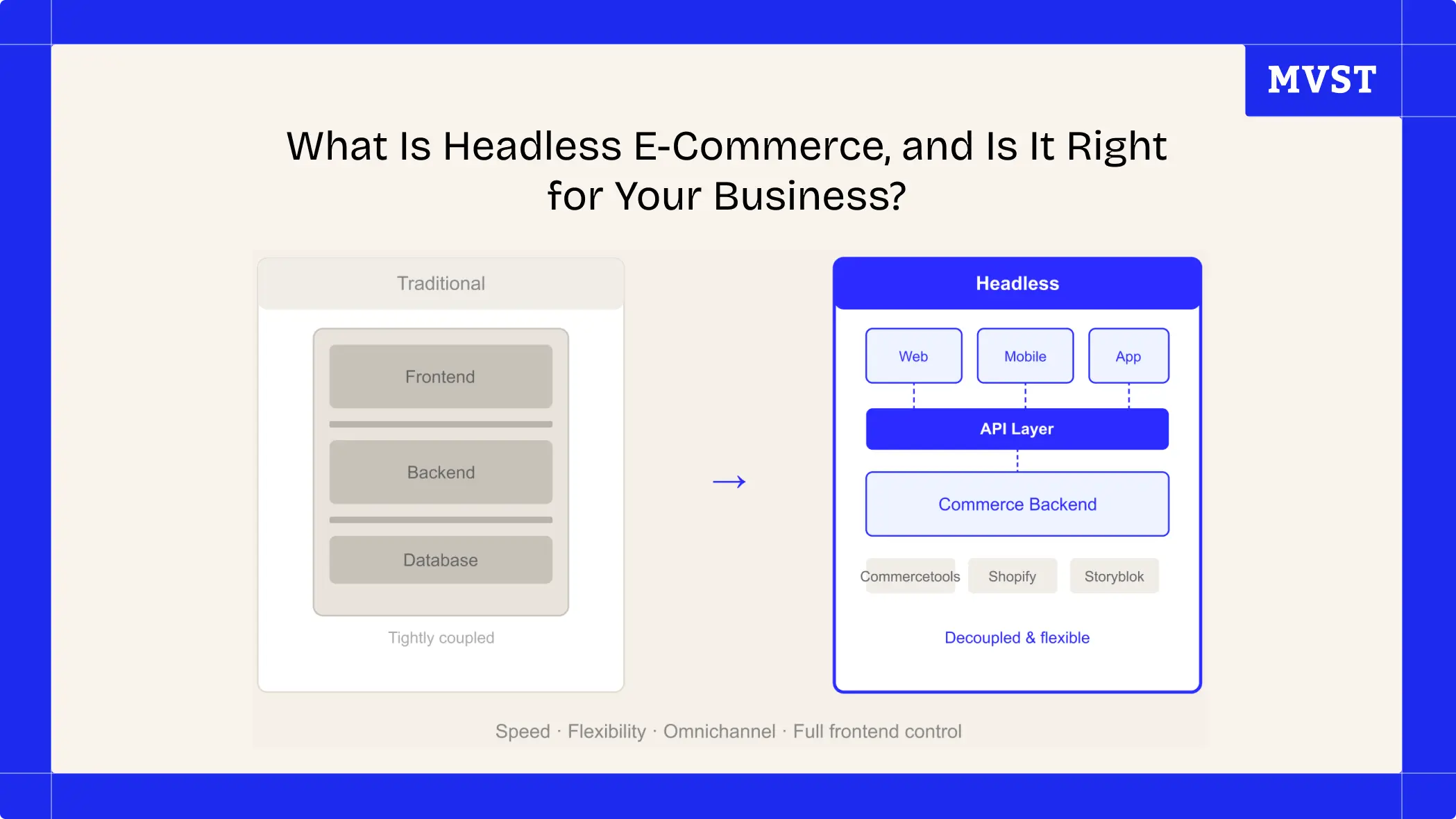
Traditional e-commerce platforms - think Magento, SAP Commerce Cloud, or a standard Shopify setup - bundle the frontend (what customers see) and the backend (where products, orders, and data live) together. They're connected, monolithic systems. Change one thing and you risk breaking another.
Headless separates the two. The backend - your product catalogue, inventory, pricing, checkout logic - runs independently. The frontend - your website, mobile app, kiosk, voice interface, whatever - connects to it via APIs. They talk to each other, but they're not the same thing.
This is why it's called "headless" - you've removed the head (the frontend) from the body (the backend).
For a deeper dive into how this works on the CMS side specifically, this post covers it well.
Why are companies moving to headless?
Three reasons come up consistently:
Speed. Frontend teams can build and deploy without waiting for backend releases. A traditional platform update that takes weeks becomes a frontend deploy that takes hours.
Flexibility. You're not locked into one platform's templates or design constraints. You can build exactly the experience you want - across web, mobile, and any other channel, without compromise.
Omnichannel. The same backend powers your website, your app, your in-store screens, and your partner integrations simultaneously. One source of truth, many frontends. Commerce apps are increasingly how leading brands are operationalising this.
The honest downsides
Headless is not a free upgrade. The tradeoffs are real:
Higher upfront cost. You're building a custom frontend from scratch rather than using a platform's built-in templates. That requires a development team and a real budget.
More complexity to maintain. Two systems instead of one means two things that can break, two things to update, two security surfaces to manage.
Longer time to first launch. If you need to be live in six weeks, headless is probably not your answer. If you're building for the next three years, it likely is.
So should your business go headless?
Here's an honest decision framework:
Go headless if:
- You're selling across multiple channels and need one backend to power all of them
- Your current platform is slowing down your marketing or product team, they can't make changes without developer involvement
- You're doing significant volume and performance at scale is a real concern
- You need deep custom functionality that your current platform can't support
- You're planning a major rebuild anyway and want to build it right this time
Stick with traditional if:
- You're early stage and need to move fast with minimal dev resources
- Your current platform works well enough and the switch cost isn't justified
- Your team doesn't have the technical capacity to manage a more complex stack
- You're primarily a single-channel business with no near-term omnichannel plans
Which platforms are worth considering?
The headless e-commerce space has consolidated around a few serious options:
Commercetools is the enterprise standard, built API-first from the ground up, highly scalable, used by major European retailers. It's powerful but requires experienced developers to implement properly. MVST is an official Commercetools partner with certified developers across composable commerce architecture.
Shopify with a headless setup (Shopify as backend, custom frontend) is a pragmatic middle ground - you get Shopify's reliable checkout and payments infrastructure with full frontend freedom. A growing number of brands are choosing this over legacy platforms like SAP and Magento for exactly this reason.
Storyblok as a headless CMS paired with a commerce backend gives your content and marketing teams full control over pages, campaigns, and localisation without touching code. MVST is a Storyblok Gold Partner and uses it across most of our e-commerce builds.
What does it cost?
Headless e-commerce is a significant investment. Realistic ranges for the European market in 2026:
| Project type | Typical range |
|---|---|
| Headless storefront on existing backend | €40,000 – €90,000 |
| Full headless replatform (new frontend + backend) | €80,000 – €200,000+ |
| Ongoing maintenance and feature development | €5,000 – €15,000/month |
These ranges assume a professional development partner with experience in headless architecture, GDPR compliance, and performance optimisation. The right agency matters as much as the right platform - here's what to look for when choosing one.
The bottom line
Headless e-commerce is not for everyone, but for businesses that are scaling, selling across multiple channels, or being held back by their current platform, it's often the right long-term investment. The key is making the decision based on your actual requirements, not on what's trending.
If you're not sure whether headless is the right move for your business, the best starting point is a conversation.
Newsroom Ideas, Design & Technology in Motion
Practical insights on AI integration, headless e-commerce, UX/UI design, and digital product development. Case studies, implementation guides, and expert perspectives from the MVST team in Munich and Barcelona.

Breastkeeper Institute: A Full Brand Ecosystem, Built End-to-End
Ghida El BadriAug 07, 2026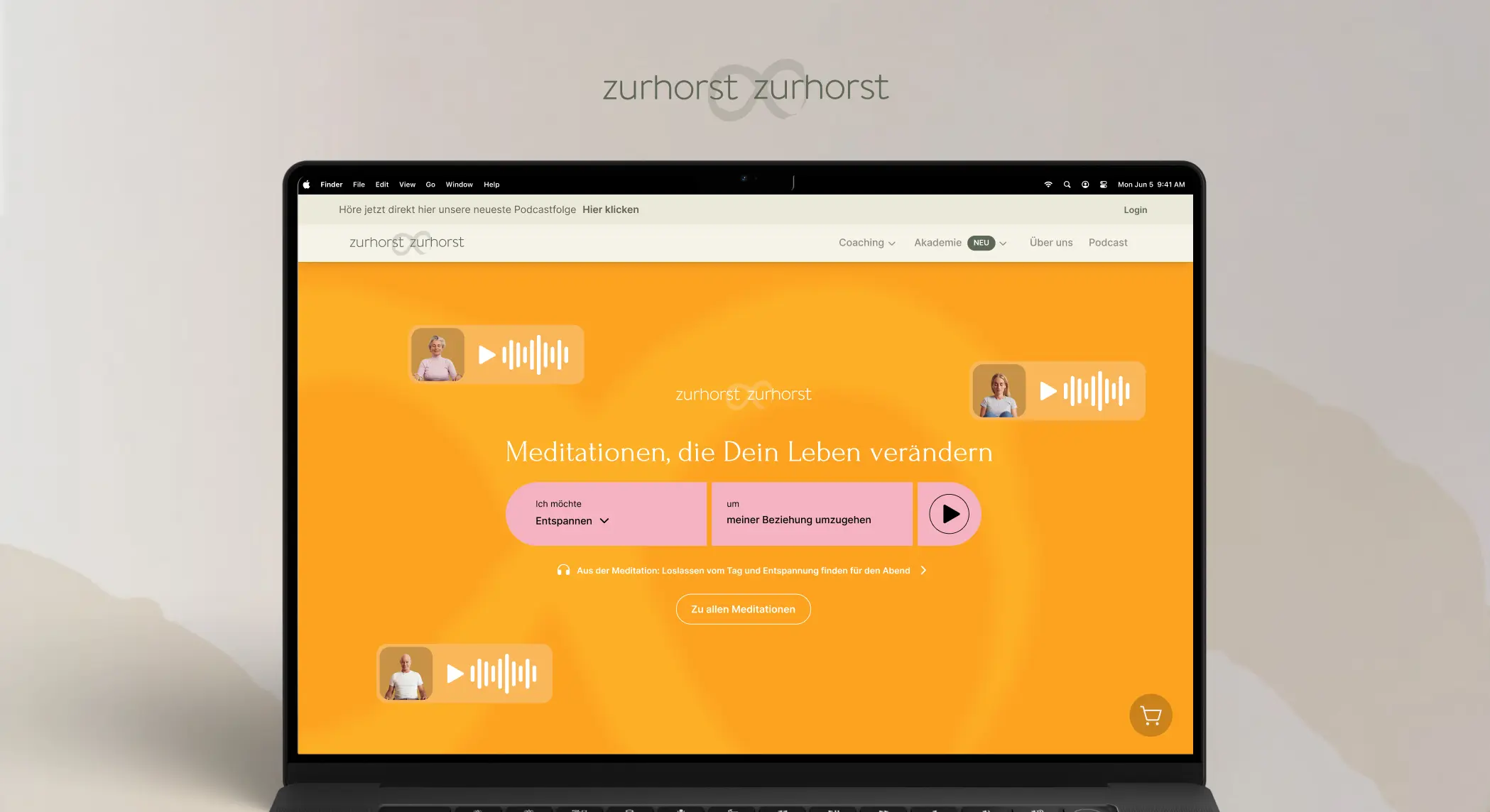
Zurhorst Meditation Shop: A Conversion-First Relaunch
Ghida El BadriAug 05, 2026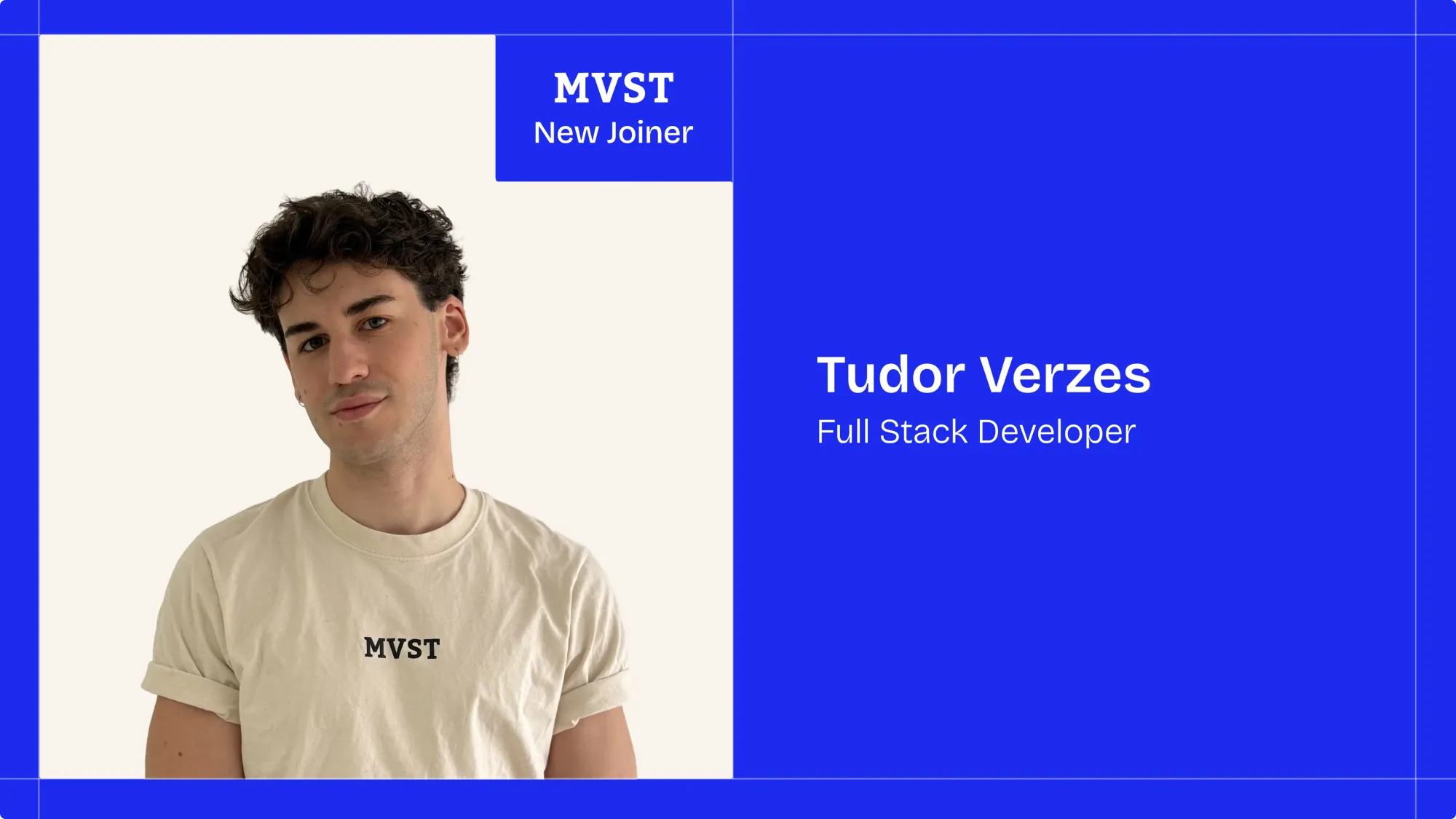
Welcome to MVST, Tudor Verzes
Ghida El BadriJul 20, 2026