
- 1. They show real outcomes, not just deliverables
- 2. They understand your industry
- 3. They're honest about AI
- 4. They have a real process, not just a pitch
- 5. They work with the right tech stack for your needs
- 6. You can reach someone when things go wrong
- 7. The contract protects you, not just them
- The shortlist question
How to Choose a Digital Product Agency in Germany: What to Look for in 2026
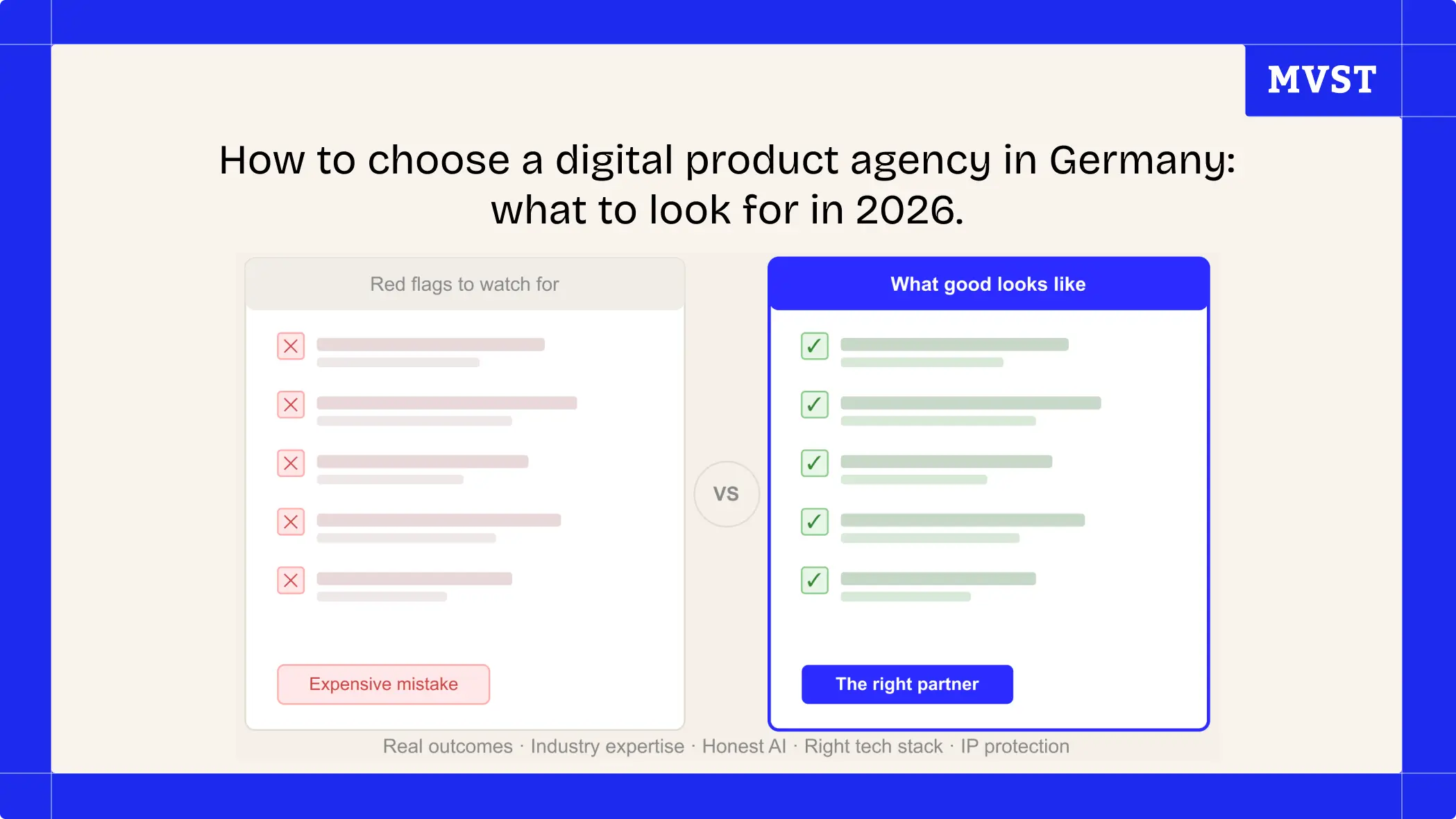
- 1. They show real outcomes, not just deliverables
- 2. They understand your industry
- 3. They're honest about AI
- 4. They have a real process, not just a pitch
- 5. They work with the right tech stack for your needs
- 6. You can reach someone when things go wrong
- 7. The contract protects you, not just them
- The shortlist question
What actually separates a good agency from an expensive mistake? There are hundreds of digital product agencies in Germany. They all have slick websites, case study carousels, and a list of logos. So how do you actually tell the difference between an agency that will ship something that works and one that will burn your budget and disappear?
This is the question every B2B founder, product lead, or CTO asks before signing a contract. Here's what actually matters.
1. They show real outcomes, not just deliverables
Any agency can show you a beautiful UI. The question is: what happened after launch?
Look for case studies that mention specific outcomes - user adoption rates, reduction in manual work, conversion improvements, time-to-market. If every case study ends at "we designed and built X" without telling you what X achieved, that's a red flag.
For example, when MVST relaunched Hoyer's mobile app, adoption doubled within days of launch. That's the kind of metric worth asking about.
2. They understand your industry
A generalist agency can build software. But if you're in healthcare, energy, logistics, or finance, you need a partner that understands the specific constraints of your sector - compliance requirements, data sensitivity, user behaviour, regulatory frameworks.
Ask them directly: have you built something in our industry before? What were the specific challenges? If they struggle to answer, they're learning on your budget.
A good example is MyPhi - a child development tracking app built around Germany's U-Untersuchung framework. Building it required understanding medical data structure, GDPR compliance, and how parents actually interact with health information. That's not something you can wing.
3. They're honest about AI
Every agency in 2026 claims to "do AI." Most mean they can call an OpenAI API. Very few have actually built production-grade AI systems - custom models, multi-agent pipelines, GDPR-compliant deployments, observability setups.
Ask them to explain specifically what AI work they've done. What models did they use? How did they handle data privacy? What does the maintenance look like after deployment?
And before you even get into agency conversations, make sure you're clear on what kind of AI work you actually need - and what it realistically costs. We broke that down in detail here.
4. They have a real process, not just a pitch
A good agency can tell you exactly how they work - from the first discovery session to handover. They should be able to explain: how they scope projects, how they handle change requests, how they communicate during development, and what happens after launch.
If the process sounds vague or changes every time you ask a follow-up question, that's a sign they're making it up as they go.
At MVST, every project starts with a scoping and discovery phase before any development begins. This is how realistic timelines and budgets get set - not after the contract is signed.
5. They work with the right tech stack for your needs
This matters more than most people realise. An agency that only knows one CMS, one framework, or one e-commerce platform will always recommend that - regardless of whether it's right for you.
Look for agencies with certified partnerships across multiple platforms. MVST works with Storyblok, Commercetools, Shopify, AWS, and Akeneo - certified partnerships, not just familiarity. We're a Storyblok Gold Partner and an official Commercetools Partner. If you're in e-commerce specifically, also check why brands are moving from SAP and Magento to Shopify.
6. You can reach someone when things go wrong
This sounds obvious but it's the thing most people only think about after it's too late. During the sales process every agency is responsive. The real test is during delivery - when a deadline shifts, a bug appears in production, or a scope question needs a fast answer.
Ask for references from past clients. Ask specifically: how did they handle problems? Not how smooth was the project - every agency cherry-picks smooth projects for references. Ask about the difficult moments.
7. The contract protects you, not just them
Before signing, check: who owns the IP? What are the payment milestones tied to? What happens if the project runs over? Is there a warranty or support period post-launch?
German agencies typically work under German law - which gives you strong protections as a client, but only if the contract is written correctly. Have a lawyer review it if the budget is significant.
The shortlist question
After all of this, the simplest shortlist question is: would I trust these people to tell me when I'm wrong?
A good agency pushes back when the brief doesn't make sense, when the timeline is unrealistic, or when the chosen approach will cause problems later. If they just say yes to everything, they're not a partner - they're a vendor.
Newsroom Ideas, Design & Technology in Motion
Practical insights on AI integration, headless e-commerce, UX/UI design, and digital product development. Case studies, implementation guides, and expert perspectives from the MVST team in Munich and Barcelona.
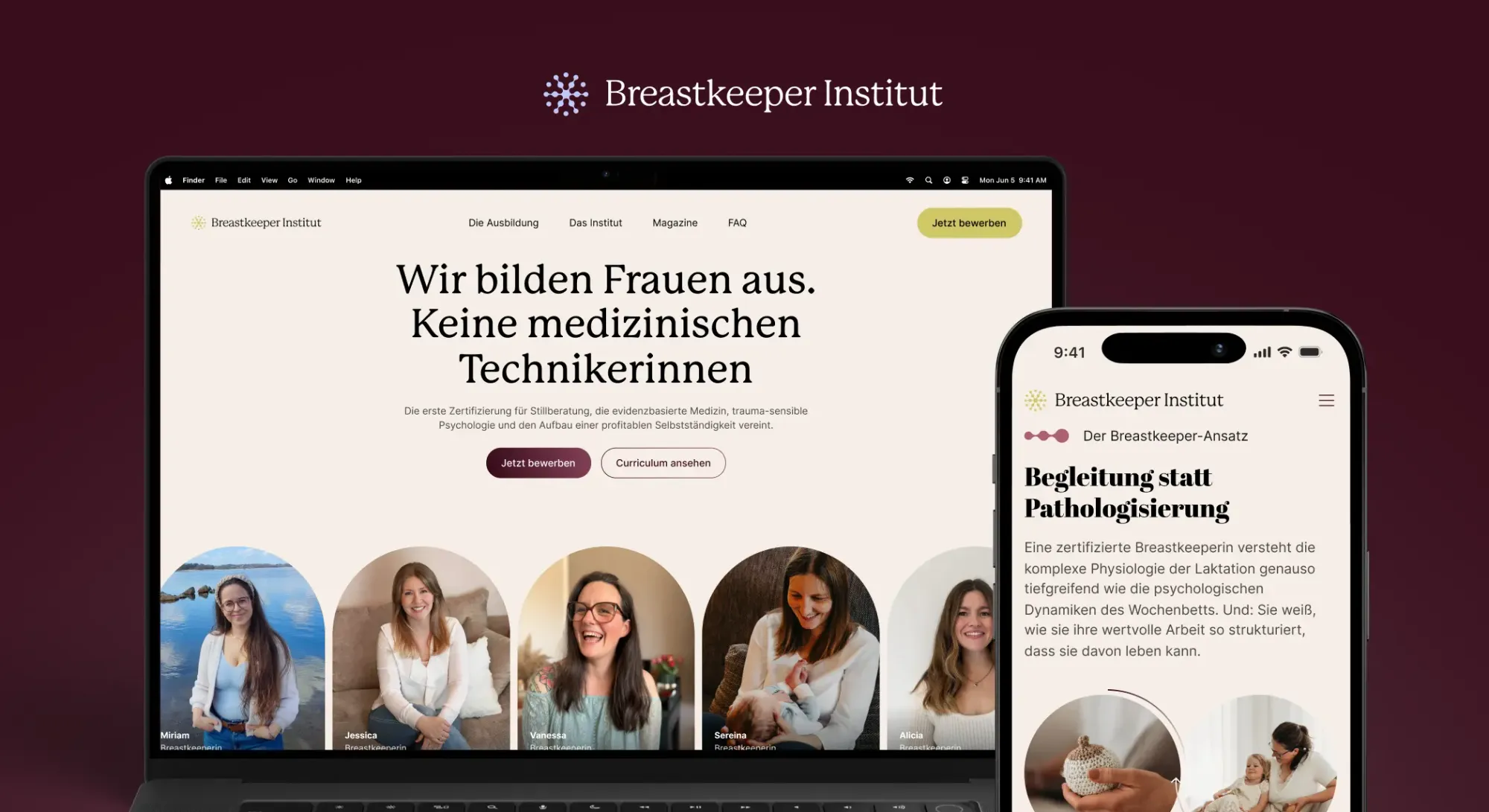
Breastkeeper Institute: A Full Brand Ecosystem, Built End-to-End
Ghida El BadriAug 07, 2026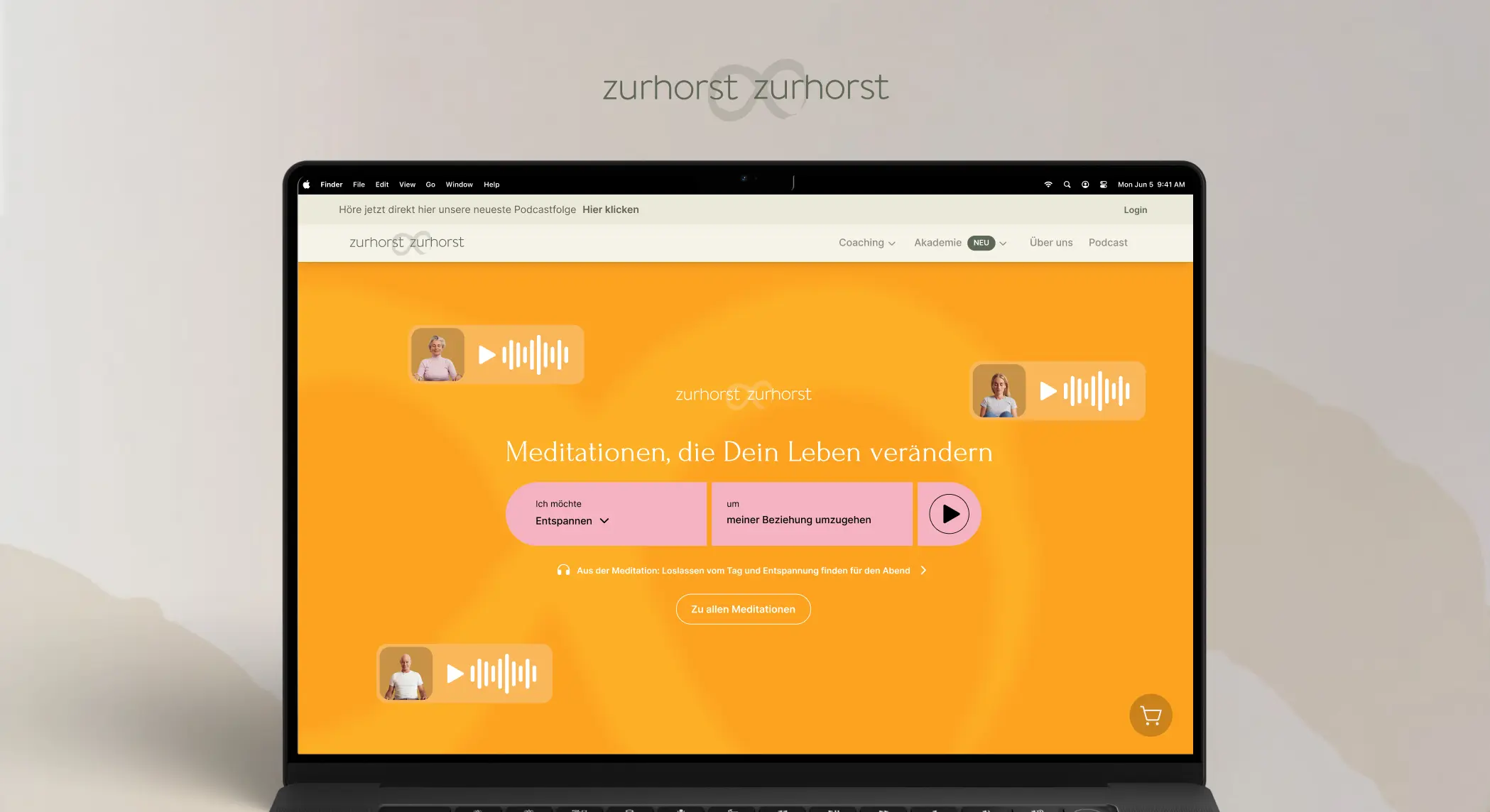
Zurhorst Meditation Shop: A Conversion-First Relaunch
Ghida El BadriAug 05, 2026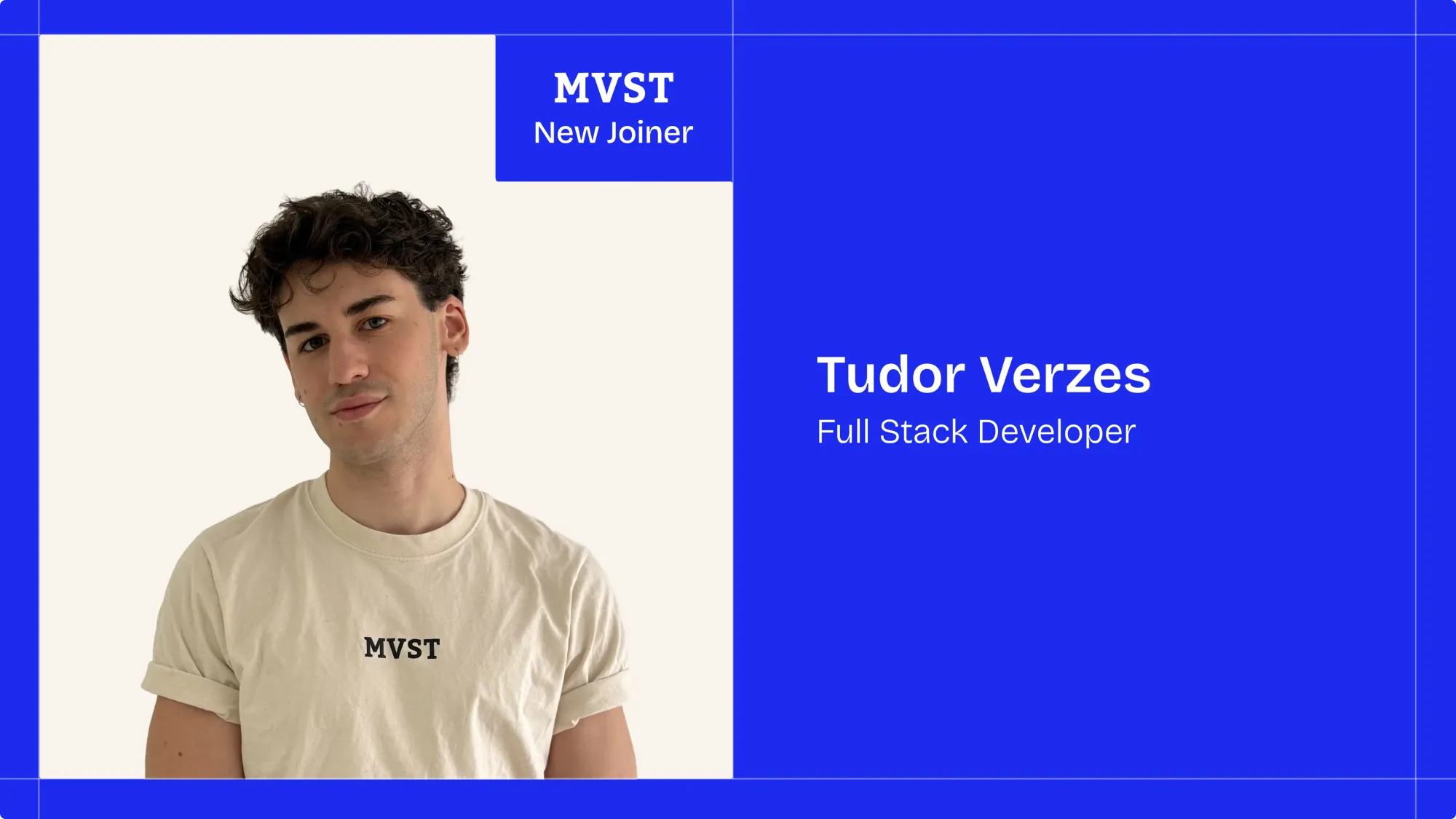
Welcome to MVST, Tudor Verzes
Ghida El BadriJul 20, 2026