
How GDPR Shapes Modern Cloud Applications
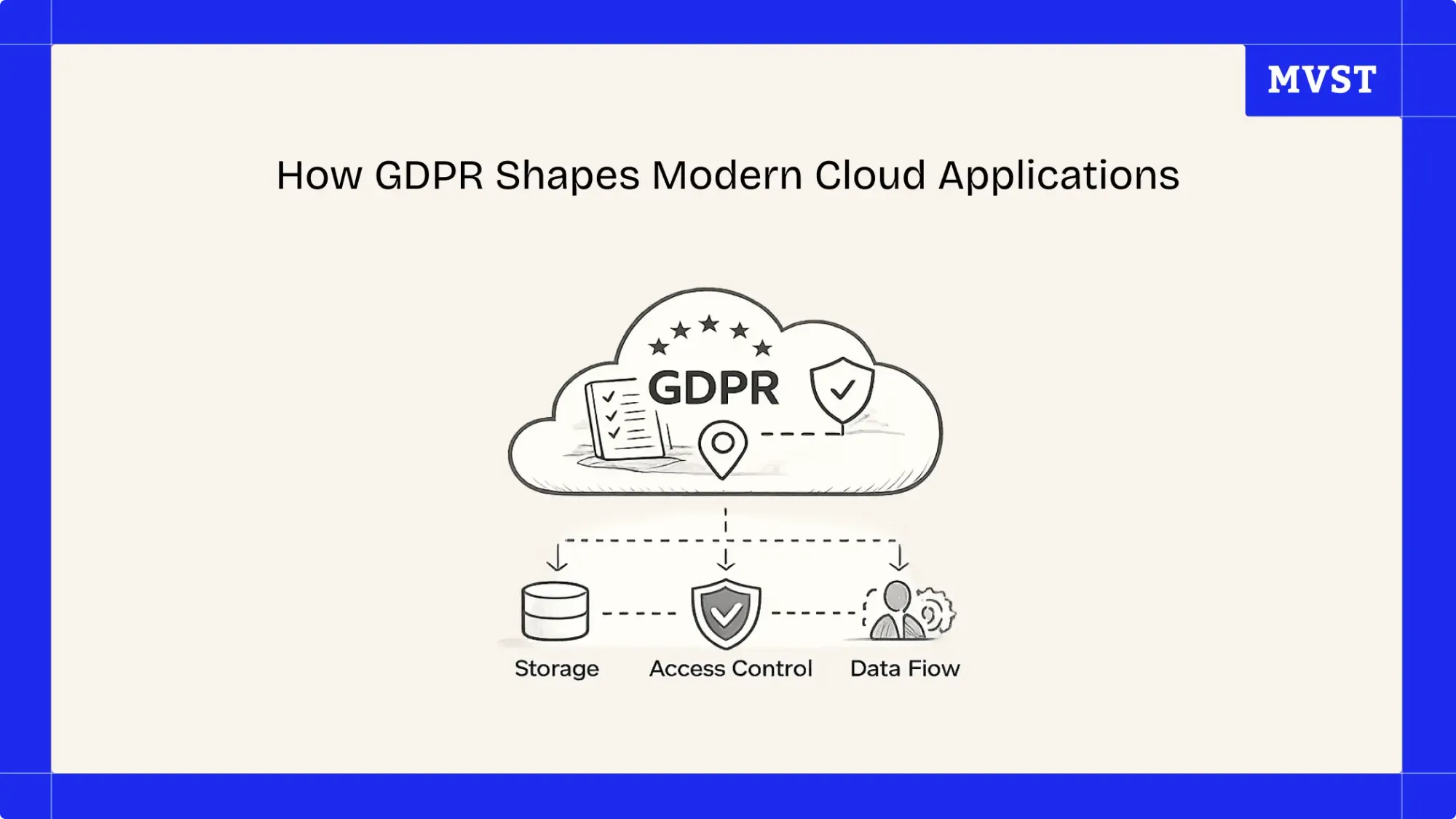
GDPR is often treated as a legal requirement that sits somewhere outside product development.
In reality, GDPR has a direct and lasting impact on how modern cloud applications are designed, built, and operated.
It doesn’t just influence policies or documentation - it shapes architecture, data flows, and system boundaries.
GDPR is not just a legal layer
At its core, GDPR regulates how personal data is:
- Collected
- Stored
- Accessed
- Processed
- Deleted
In cloud-based applications, those actions are not abstract. They are implemented through:
- Infrastructure choices
- Authentication mechanisms
- Middleware logic
- Data storage strategies
As a result, GDPR becomes a technical and architectural concern, not just a legal one.
Data minimization starts with architecture
One of GDPR’s core principles is data minimization:
only collect and process data that is truly necessary.
In modern cloud applications, this affects:
- What data is stored at all
- Where that data lives
- Which systems are allowed to access it
Middleware plays a key role here by ensuring that:
- Frontends never receive more data than needed
- Requests are scoped to specific purposes
- Sensitive fields are filtered or transformed before being exposed
GDPR is enforced not by intention, but by system design.
Access control is a GDPR requirement
GDPR requires that personal data is only accessible to those who are authorized to see it.
This directly ties GDPR to:
- Authentication
- Authorization
- Role-based access
A user being logged in is not enough.
The system must be able to clearly answer:
- Who accessed which data
- Under what permissions
- At what point in time
This is why GDPR cannot be addressed without a robust authentication and middleware layer.
Data location and cloud infrastructure
Another common GDPR concern is where data is stored.
In cloud environments, this means:
- Choosing specific regions
- Preventing unintended data transfers
- Understanding which systems replicate or cache data
Cloud platforms like AWS make region-based hosting possible, but it is up to the product architecture to ensure data actually stays where it should.
GDPR compliance is not automatic.
It is the result of deliberate infrastructure decisions.
Transparency and traceability
GDPR emphasizes accountability.
Organizations must be able to demonstrate how data is handled.
From a technical perspective, this requires:
- Clear data flows
- Centralized logic for processing data
- Logging and monitoring of access
Middleware often becomes the place where:
- Requests are logged
- Decisions are traceable
- Data handling is consistent across the system
Without this layer, transparency becomes difficult to maintain.
Deletion, correction, and lifecycle management
GDPR gives users rights over their data, including:
- The right to access
- The right to correct
- The right to delete
Supporting these rights affects:
- Database design
- Data relationships
- Backup and retention strategies
Modern systems must be built so that data can be:
- Found reliably
- Updated consistently
- Removed without breaking the system
This is rarely trivial, and it must be planned early.
GDPR as a product constraint
GDPR doesn’t only shape backend systems.
It also influences product decisions.
It affects:
- What users can see
- What actions are possible
- How much context is shown
- How consent is handled
In products that deal with sensitive information, GDPR often determines what the product is allowed to be, not just how it operates.
In preventive healthcare products like aeon, GDPR considerations are inseparable from infrastructure and product design.
Key takeaway
GDPR is not a checkbox at the end of development.
It shapes modern cloud applications by influencing:
- Architecture
- Data flows
- Access control
- System responsibility
In cloud-based products, GDPR compliance emerges from how systems are built, not from documentation alone.
Thinking about your setup?
GDPR impacts more than policies and shapes architecture and data flows.
If you’re navigating these decisions in your own product, we’re happy to discuss your setup.
BlogBits und Bytes voller digitaler Einblicke.
Praxisnahe Einblicke zu KI-Integration, Headless E-Commerce, UX/UI-Design und digitaler Produktentwicklung. Fallstudien, Implementierungsleitfäden und Expertenperspektiven vom MVST-Team in München und Barcelona.
Breastkeeper Institut: Ein durchgängiges Marken-Ökosystem, von A bis Z
Ghida El Badri07. Aug. 2026
Zurhorst Meditation Shop: Relaunch mit Fokus auf Conversion
Ghida El Badri05. Aug. 2026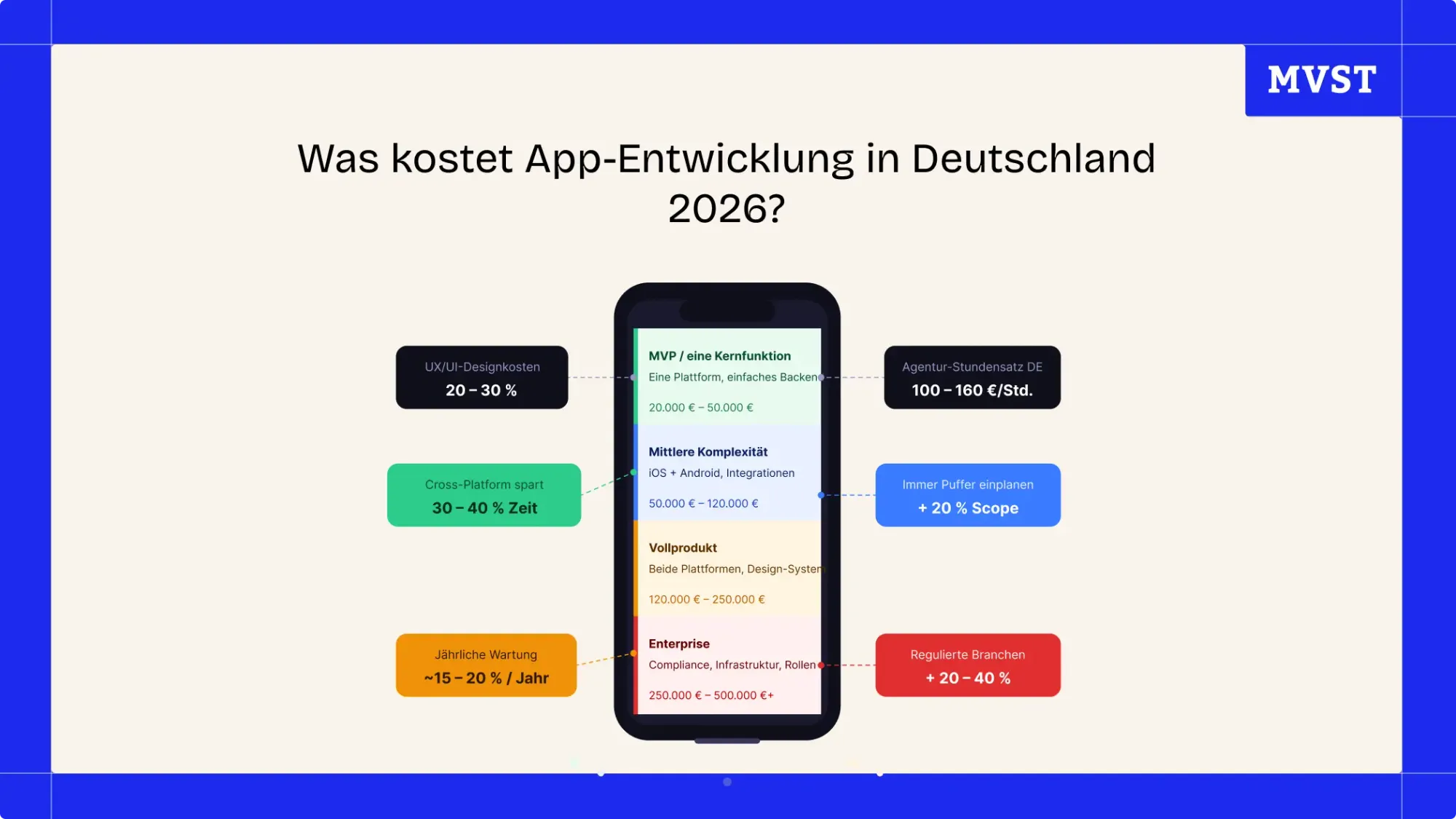
Was kostet App-Entwicklung in Deutschland 2026?
Ghida El Badri17. Juni 2026