
Best AI Tools for Vibe Coding (2026)
Vibe coding is changing how products are built.
What used to take weeks or months can now be prototyped in hours using AI-powered tools. From generating code to deploying full applications, a new generation of platforms is making it easier than ever to turn ideas into working products.
But with so many tools available, it’s not always clear:
- which ones to use
- how they fit together
- and what happens after you build
In this guide, we break down the best AI tools for vibe coding in 2026 - and what you should watch out for before launching.
What Is Vibe Coding?
Vibe coding refers to building software using AI tools that generate, modify, and connect code for you.
Instead of writing everything manually, you can:
- generate features with prompts
- connect APIs instantly
- build full apps in hours
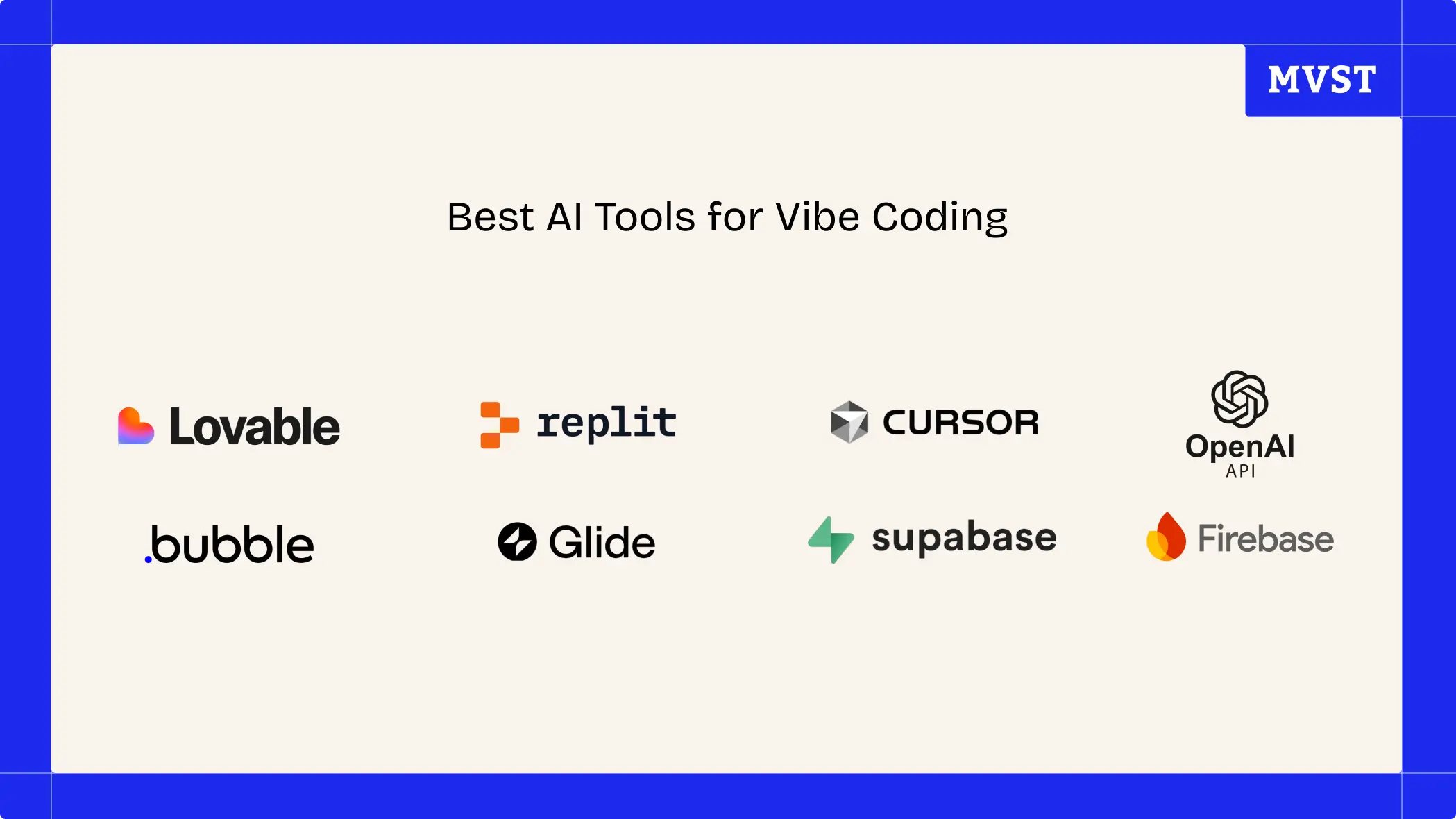
Tools like Lovable, Replit, and Cursor are at the core of this shift.
Best AI App Builders
These tools help you go from idea → working app fast.
Lovable
- Full-stack app building with AI workflows
- Great for fast MVPs
- Increasingly popular in early-stage startups
Replit
- Browser-based development environment
- Built-in AI coding features
- Easy deployment directly from the platform
Bubble
- Visual no-code builder
- Often combined with AI tools
- Good for non-technical founders
Glide
- Simple app builder for MVPs and internal tools
- Fast setup with minimal complexity
Best AI Coding Tools
These tools help you write and iterate code faster.
Cursor
- AI-powered code editor
- Generates and edits code directly
- Widely used for vibe coding workflows
OpenAI (GPT APIs)
- Power AI features inside your product
- Generate logic, content, and workflows
Bolt.new
- AI-first app generation
- Focused on speed and simplicity
Vercel v0
- Generates UI components instantly
- Ideal for frontend development
Backend & Infrastructure Tools
These tools power your app behind the scenes.
Supabase
- Open-source Firebase alternative
- Database, auth, and APIs
Firebase
- Full backend platform
- Real-time database + authentication
How to Choose the Right Stack
Non-technical --> Bubble, Glide
Technical --> Cursor, Supabase
Fast MVP --> Lovable, Replit
What Most People Miss About Vibe Coding
Most vibe-coded apps work perfectly as prototypes - but fail when real users arrive.
Common issues:
- Exposed API keys in frontend code
- Public or unsecured databases
- Missing authentication controls
- Weak infrastructure setup
- No scalability planning
👉 These problems usually only appear right before launch.
From Vibe Coding to Production
If you’ve built something with tools like Lovable, Replit, or Cursor, the next step is making sure it’s actually ready for real users.
That means checking:
- security
- infrastructure
- data handling
- compliance
👉 This is where a launch readiness review becomes critical.
→ Prepare your app for launch here
Final Thoughts
Vibe coding is transforming how products are built.
But speed comes with trade-offs.
Choosing the right tools is important -
making sure your product is stable, secure, and production-ready is what actually determines success.
Newsroom Ideas, Design & Technology in Motion
Practical insights on AI integration, headless e-commerce, UX/UI design, and digital product development. Case studies, implementation guides, and expert perspectives from the MVST team in Munich and Barcelona.

Breastkeeper Institute: A Full Brand Ecosystem, Built End-to-End
Ghida El BadriAug 07, 2026
Zurhorst Meditation Shop: A Conversion-First Relaunch
Ghida El BadriAug 05, 2026
Welcome to MVST, Tudor Verzes
Ghida El BadriJul 20, 2026