
Security in Preventive Healthcare Applications
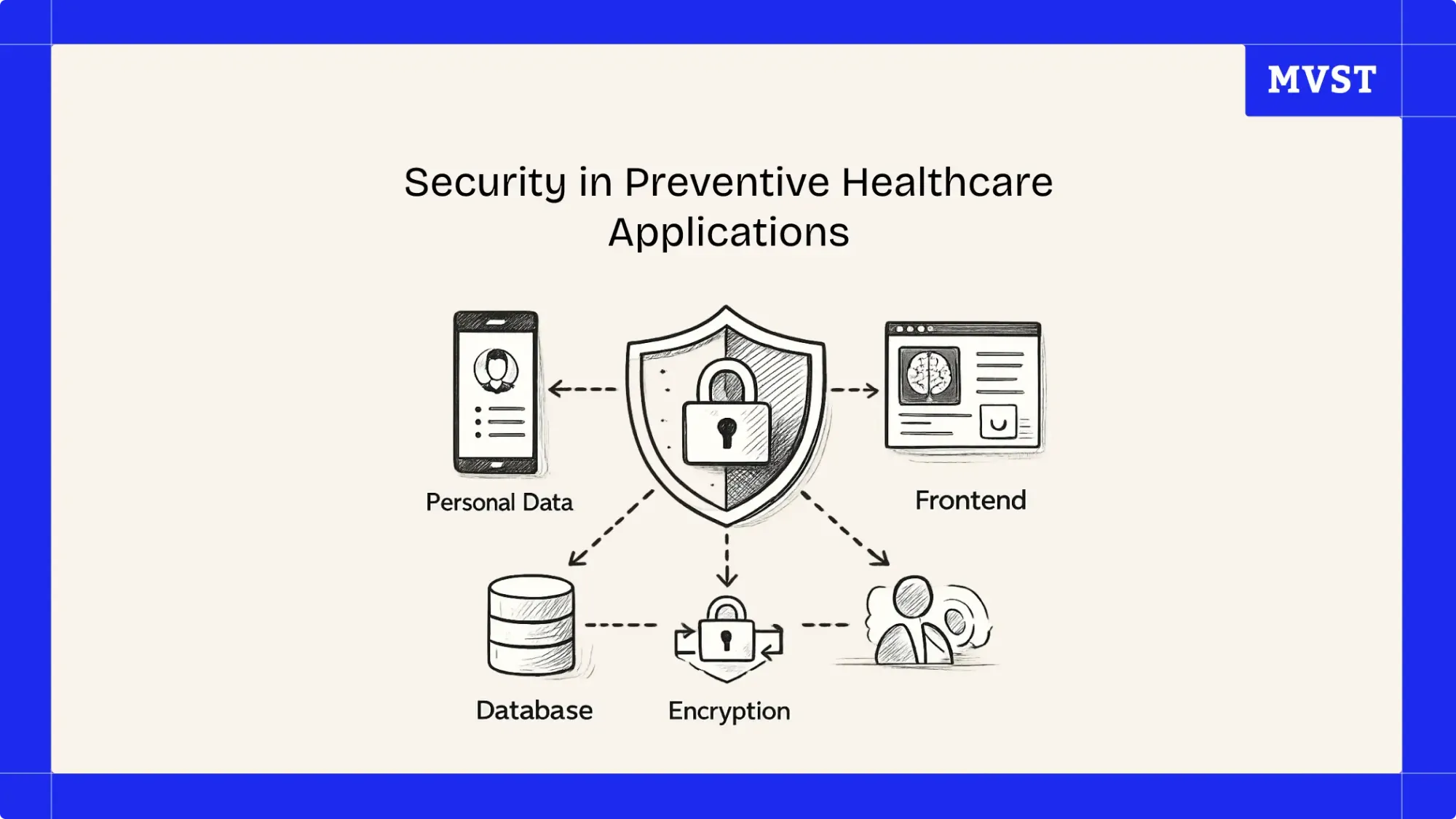
Security in healthcare products is often discussed in abstract terms.
In practice, it quickly becomes concrete.
When working on preventive healthcare applications like aeon, security decisions directly shape system architecture, data handling, and long-term trust. They are not isolated technical measures - they define how responsibility is distributed across the product.
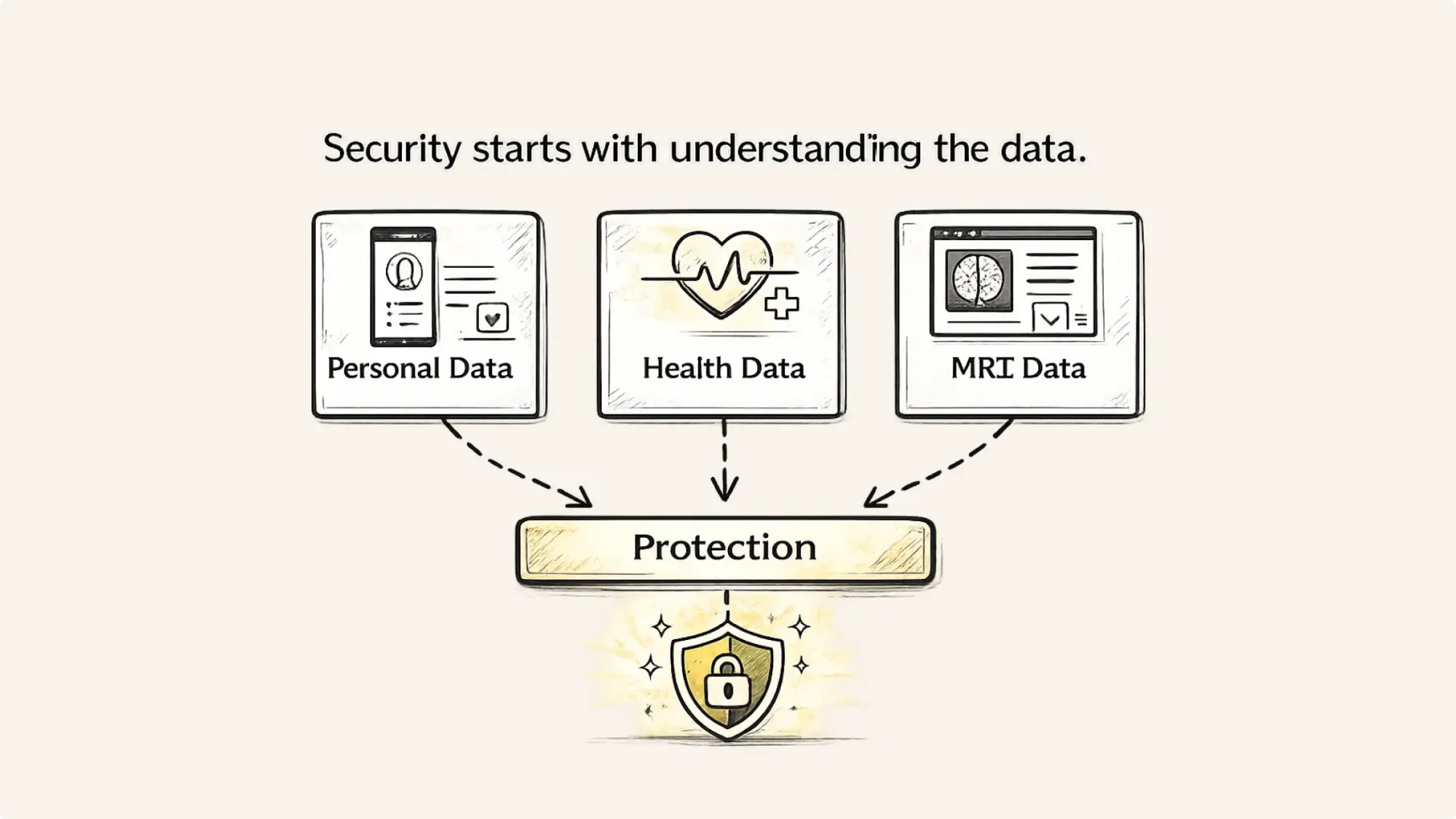
Security starts with understanding the data
Before choosing tools or infrastructure, the first question was simple:
what data actually needs protection?
In this context, that included:
- personal user data
- health-related information
- data originating from MRI checkups
Not all data carries the same level of sensitivity. Being explicit about this early on influenced every architectural decision that followed - from access control to system boundaries.
These considerations connect closely to the principles discussed in Is AWS Secure?, where responsibility is shared between cloud platforms and product teams.
The database is the most sensitive part of the system
It’s easy to assume that security risks live primarily in user interfaces or visible features.
In reality, responsibility concentrates at the data layer.
The frontend is a visual layer.
The backend contains logic.
But the database is the owner of the data.
Protecting sensitive information meant focusing less on individual screens and more on controlling how every other part of the system interacts with storage.
The frontend never owns sensitive data
One core principle was keeping the frontend deliberately limited in scope.
It:
- does not decide which data is valid
- does not store sensitive information
- only displays what the API explicitly allows
All decisions about access, filtering, and validation happen server-side.
This separation reduces risk and aligns closely with the ideas outlined in How Data Flows Through Modern Applications, where controlled data movement is a fundamental architectural concern.
Encryption as a baseline, not a trade-off
Security measures did not need to come at the expense of usability.
Data was encrypted:
- in transit
- at rest
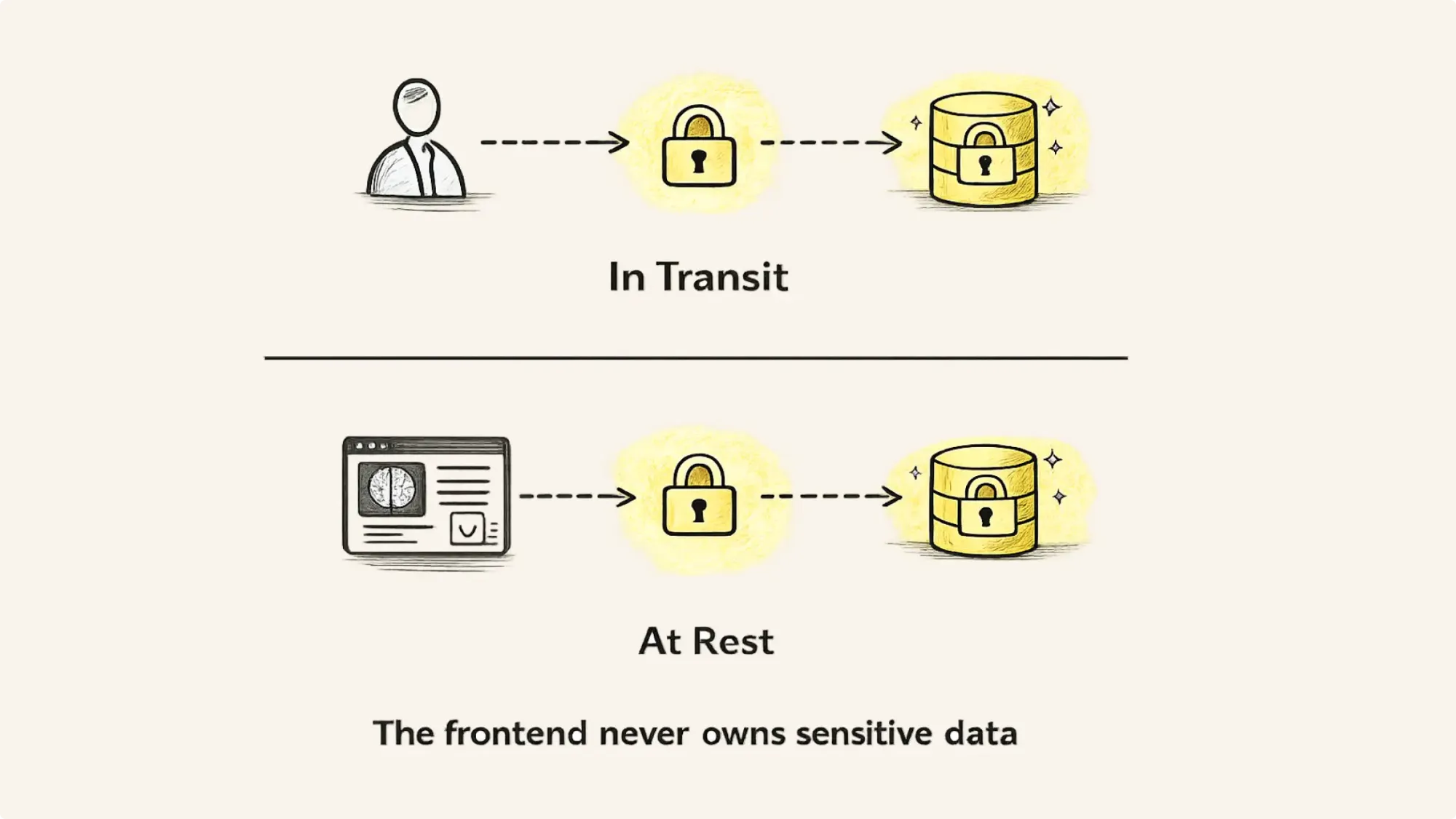
And this did not create noticeable friction in the user experience.
Security wasn’t simplified to ship faster, nor added later as a protective layer. It was treated as a baseline requirement from the beginning.
Security without added friction
A common concern in healthcare products is whether stronger security will negatively affect usability.
In this case, it didn’t.
Clear system boundaries, well-defined responsibilities, and early architectural decisions made it possible to maintain a smooth user experience while still handling sensitive data responsibly.
Why this matters in practice
Security decisions rarely look dramatic when everything works as intended.
But they shape:
- how systems evolve
- how responsibilities are enforced
- how much trust a product can earn over time
You can see how these principles come together in the aeon showcase, where architecture, data handling, and product decisions are tightly connected.
Key takeaway
Security in preventive healthcare applications is not about adding more layers - it’s about placing responsibility where it belongs.
By:
- understanding the sensitivity of the data
- protecting storage as the core risk surface
- limiting frontend responsibility
- and treating encryption as a baseline
systems become easier to reason about, safer to operate, and more resilient over time.
Building something similar?
If you’re developing a preventive healthcare product where sensitive data, system boundaries, and security decisions matter from day one, architecture shouldn’t be an afterthought.
If you’d like to discuss how to design a secure and scalable healthcare application - from infrastructure to product layer, feel free to get in touch.
BlogBits und Bytes voller digitaler Einblicke.
Praxisnahe Einblicke zu KI-Integration, Headless E-Commerce, UX/UI-Design und digitaler Produktentwicklung. Fallstudien, Implementierungsleitfäden und Expertenperspektiven vom MVST-Team in München und Barcelona.
Breastkeeper Institut: Ein durchgängiges Marken-Ökosystem, von A bis Z
Ghida El Badri07. Aug. 2026
Zurhorst Meditation Shop: Relaunch mit Fokus auf Conversion
Ghida El Badri05. Aug. 2026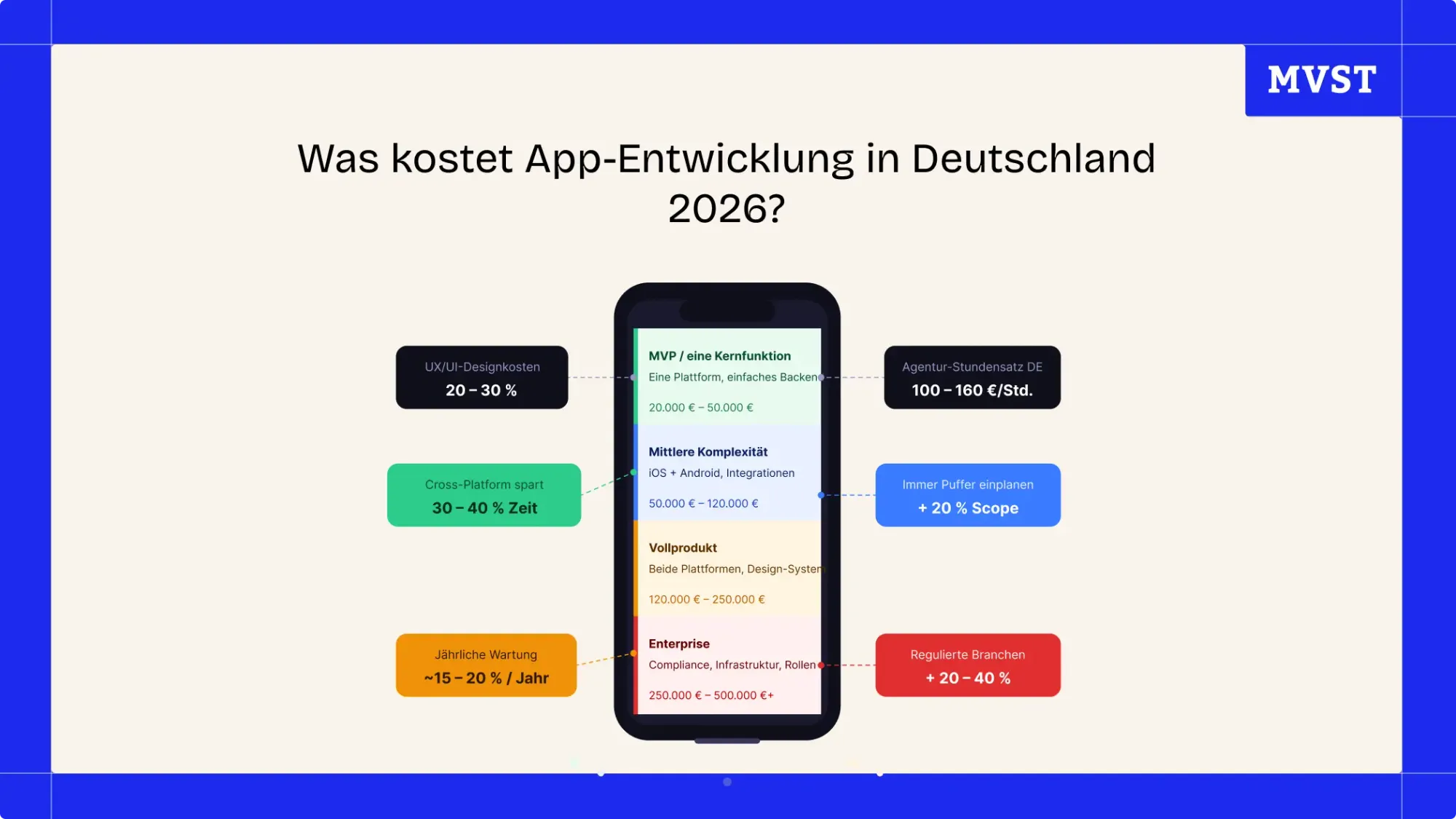
Was kostet App-Entwicklung in Deutschland 2026?
Ghida El Badri17. Juni 2026