
Launching an AI App with Lovable, Replit or Cursor? Read This Before You Go Live
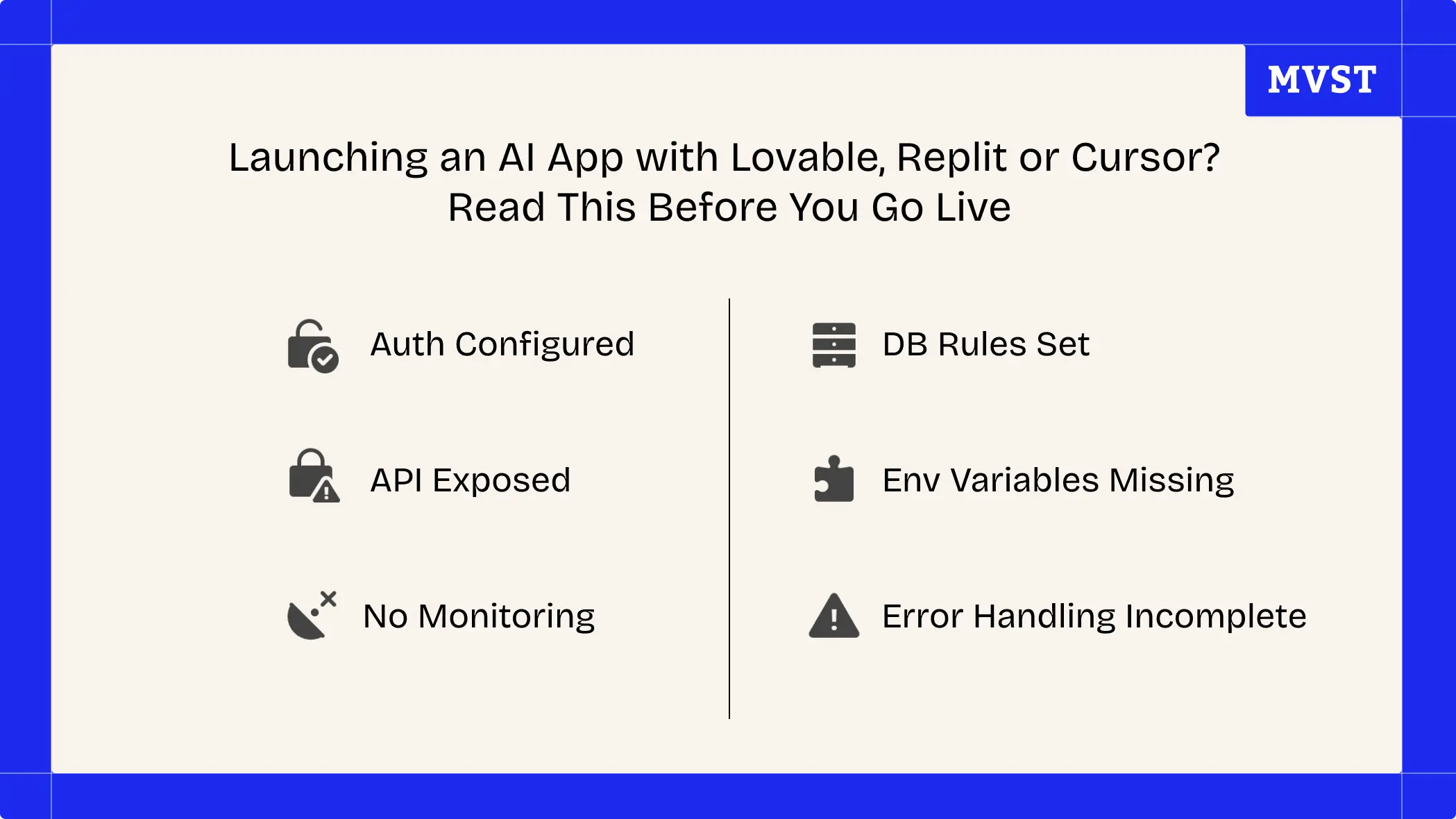
You’re probably closer to launch than you think. You’re also probably missing a few critical things.
If you built your app with Lovable, Replit, or Cursor, you likely got to a working product fast.
At some point, you hit this:
👉 “We could actually launch this.”
And that’s exactly the dangerous moment.
Because what feels like “done” is usually just:
👉 “works under ideal conditions.”
The Pre-Launch Reality Check
Before you go live, forget features for a second.
Ask yourself this instead:
- What happens if 100 users sign up at the same time?
- What happens if someone tries to break your app?
- What happens if your API fails?
👉 If you don’t know the answer, you’re not ready to launch.
The 7 Things to Check Before You Go Live
Not theory. Not best practices.
👉 This is the actual pre-launch checklist most AI-built apps skip.
1. Can Someone Break Your App in 2 Minutes?
Open your app in an incognito tab.
Try:
- accessing routes without logging in
- modifying requests in the browser
- calling your API directly
👉 If anything works that shouldn’t - fix it before launch.
2. Do You Know Where Your Secrets Are?
Search your codebase for:
- API keys
- tokens
- credentials
👉 If they exist in your frontend or repo, assume they are already exposed.
3. What Happens When Something Fails?
Break something on purpose:
- disconnect an API
- send invalid data
- simulate an error
👉 Does your app handle it, or just crash silently?
4. Can Your Database Be Queried Publicly?
Test:
- direct API calls
- database endpoints
- unauthorized access
👉 If you can access data without proper auth, others can too.
5. Are You Logging Anything Useful?
Right now, ask:
- Do you know when errors happen?
- Do you know where they happen?
👉 If not, you’re launching blind.
6. Can Your App Handle 10x Traffic?
You don’t need full load testing.
Just think:
- what happens if usage spikes?
- where is the bottleneck?
👉 If you don’t know, that’s the risk.
7. Who Owns the System After Launch?
This is where most AI-built apps fail.
Ask:
- Who understands the system end-to-end?
- Who fixes things when they break?
👉 If the answer is “kind of everyone” → it’s no one.
What Most Teams Do Wrong Right Before Launch
They:
- add more features
- polish UI
- fix small bugs
Instead of:
👉 validating what could break
A Better Way to Launch
Shift your mindset:
❌ “What else do we need to build?”
✅ “What could fail the moment we go live?”
That’s the difference between:
- a demo
- and a product people can rely on
If You’re Unsure, That’s the Signal
Most teams don’t launch because everything is perfect.
They hesitate because:
👉 something feels off, but they can’t pinpoint it.
That’s usually:
- security gaps
- infrastructure blind spots
- unclear system behavior
Don’t Guess Before You Launch
If you built with:
- Lovable
- Replit
- Cursor
👉 you’re already fast.
Now it’s about being sure.
We help teams:
- pressure-test their product
- uncover weak spots
- get clarity before launch
👉 Get a clear “ready / not ready” before going live
Final Thought
Most apps don’t fail because they were built wrong.
They fail because they were launched too early and too blindly.
👉 A good launch is not fast - it’s confident.
BlogBits und Bytes voller digitaler Einblicke.
Praxisnahe Einblicke zu KI-Integration, Headless E-Commerce, UX/UI-Design und digitaler Produktentwicklung. Fallstudien, Implementierungsleitfäden und Expertenperspektiven vom MVST-Team in München und Barcelona.

Breastkeeper Institut: Ein durchgängiges Marken-Ökosystem, von A bis Z
Ghida El Badri07. Aug. 2026
Zurhorst Meditation Shop: Relaunch mit Fokus auf Conversion
Ghida El Badri05. Aug. 2026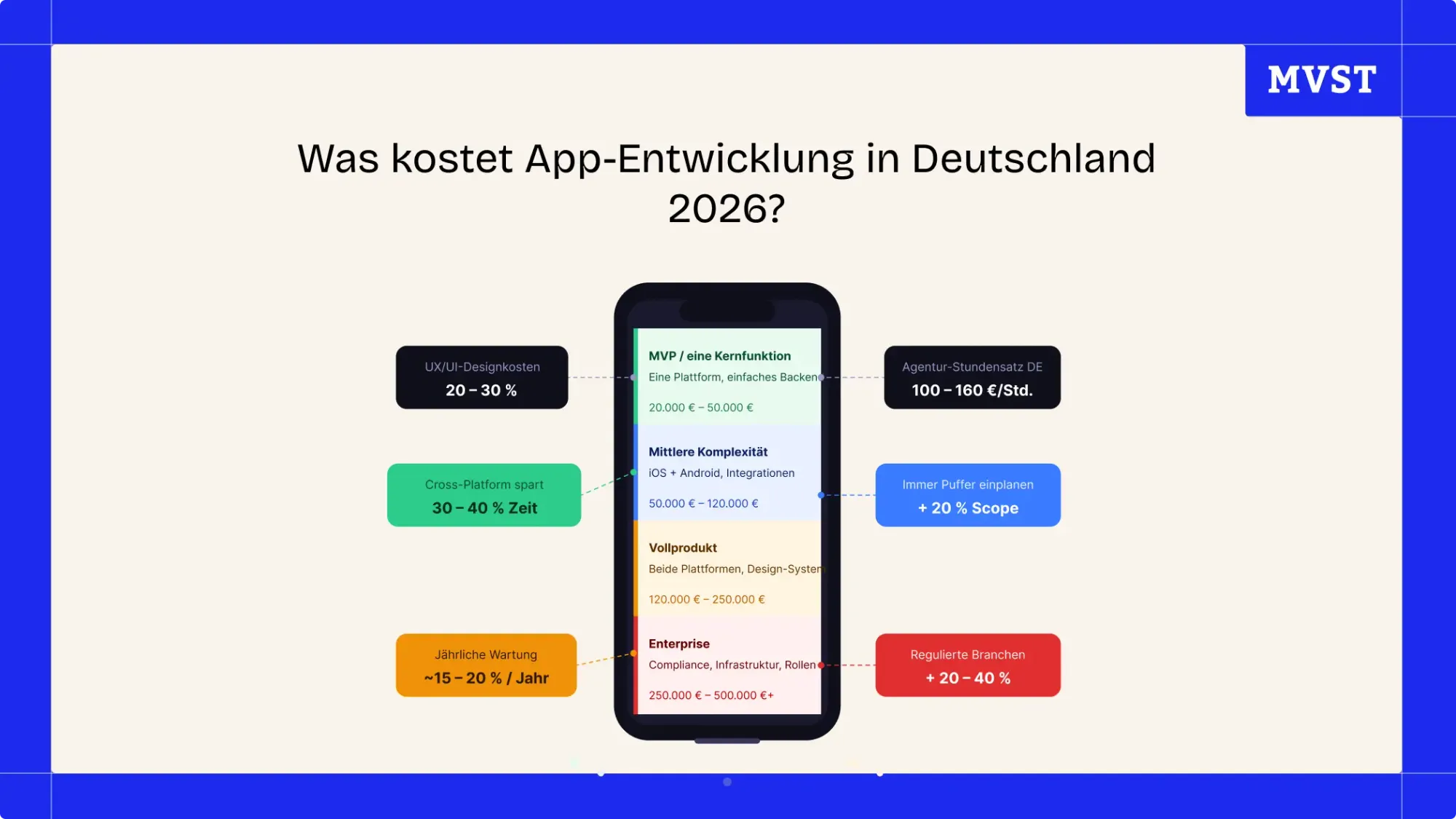
Was kostet App-Entwicklung in Deutschland 2026?
Ghida El Badri17. Juni 2026